
What is Nahuatl?
Nahuatl is an indigenous language belonging to the Uto-Aztecan language family, historically spoken by the Aztec Empire and currently maintained by over 1.7 million speakers across Mexico.
The name “Nahuatl” itself means “clear sound” or “command,” reflecting the language’s melodious nature and its role as a language of authority throughout Mesoamerican history.
This remarkable indigenous Mexican language served as the lingua franca of ancient Mesoamerica, facilitating trade, diplomacy, and cultural exchange across vast territories.
The Aztec language encompasses a complex system of agglutinative grammar, where words are formed by combining multiple meaningful elements, allowing for incredibly precise and nuanced expression.
This linguistic sophistication enabled the creation of extensive oral traditions, detailed historical records, and sophisticated philosophical and scientific discourse that rivaled any civilization of its time.
Why You Should Care About Nahuatl
Understanding Nahuatl opens a window into one of the world’s most sophisticated ancient civilizations.
The Aztec language carries immense cultural and historical importance, offering insights into pre-Columbian philosophy, science, literature, and social organization that shaped the development of the Americas.
The language preserves unique ways of understanding the world, including concepts of time, space, and human relationships that differ fundamentally from European perspectives.
Beyond its historical significance, Nahuatl culture continues to influence modern Mexican identity in profound ways.
From the foods we eat (chocolate, tomato, avocado) to the places we know (Mexico, Guatemala, Nicaragua), Nahuatl words permeate contemporary life, often without our conscious awareness.
This linguistic legacy represents a bridge between ancient wisdom and contemporary understanding, offering valuable perspectives on sustainability, community organization, and spiritual practices that remain relevant today.
Nahuatl Today: A Living Language
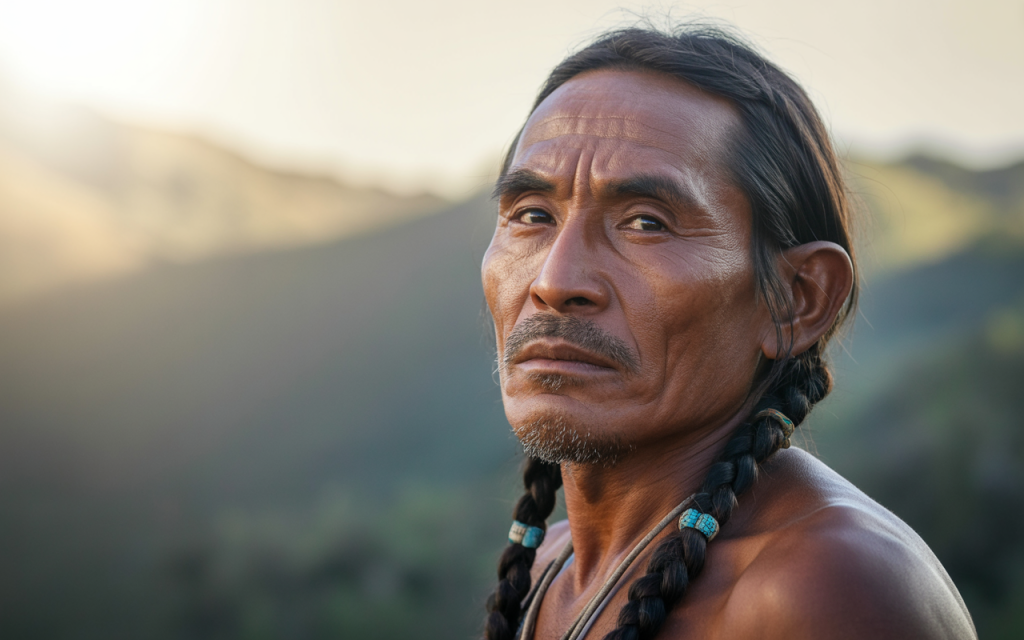
Despite centuries of colonization and cultural suppression, Nahuatl thrives as a living language with approximately 1.7 million speakers concentrated primarily in central Mexico, including the states of Puebla, Veracruz, Hidalgo, San Luis Potosí, and Guerrero.
This geographic distribution reflects both historical migration patterns and the resilience of Nahuatl-speaking communities in maintaining their linguistic heritage against tremendous odds.
The current vitality of Nahuatl varies significantly across regions and communities. While some areas maintain strong intergenerational transmission, others face challenges as younger generations increasingly adopt Spanish as their primary language.
However, recent decades have witnessed a remarkable resurgence of interest in Nahuatl, with universities offering courses, digital platforms providing learning resources, and cultural movements celebrating indigenous identity contributing to renewed appreciation for this ancient tongue.
1. The Origins and History of the Nahuatl Language

Early Beginnings: Uto-Aztecan Roots
The Nahuatl history traces back over a thousand years to its origins within the broader Uto-Aztecan language family, which includes languages spoken from the northwestern United States to Central America.
Linguistic evidence suggests that Proto-Uto-Aztecan, the ancestral language from which Nahuatl descended, was spoken approximately 5,000 years ago in the southwestern United States or northwestern Mexico.
Archaeological and linguistic research indicates that early Nahuatl-speaking peoples migrated southward into central Mexico around 500-600 CE, bringing with them agricultural knowledge, religious practices, and social structures that would profoundly influence Mesoamerican civilization.
These migrations were not single events but rather gradual movements of various groups over several centuries, each contributing to the rich tapestry of Nahuatl dialects and cultural variations we observe today.
The relationship between Nahuatl and other Uto-Aztecan languages reveals fascinating insights into ancient American migrations and cultural exchanges.
Languages like Hopi, Comanche, and Shoshone share common roots with Nahuatl, suggesting extensive prehistoric connections across vast distances.
This linguistic kinship provides valuable evidence for understanding pre-Columbian trade networks, population movements, and cultural diffusion throughout the Americas.
Classical Nahuatl and the Aztec Empire
The period from 1200 to 1521 CE marked the golden age of Classical Nahuatl, when the language reached unprecedented heights of literary and administrative sophistication under the Aztec Empire.
During this era, Nahuatl served not only as the language of the ruling Mexica people but also as the administrative lingua franca throughout the vast territories controlled by the Triple Alliance of Tenochtitlan, Texcoco, and Tlacopan.
Classical Nahuatl developed into a highly refined instrument of governance, literature, and scientific discourse.
The language possessed an extensive vocabulary for describing complex philosophical concepts, mathematical calculations, astronomical observations, and detailed historical records.
Aztec scribes used this sophisticated linguistic system to maintain tribute records, legal documents, historical chronicles, and religious texts that demonstrated remarkable intellectual achievement.
The standardization of Classical Nahuatl reflected the political and cultural dominance of the Aztec Empire.
Educational institutions in major cities taught refined forms of the language to nobility and scribes, while poets and scholars created literary works that celebrated both imperial achievements and deeper spiritual insights.
This period produced some of the finest examples of indigenous American literature, including complex philosophical treatises on the nature of existence, elaborate historical narratives, and beautiful lyrical poetry that continues to inspire readers today.
Colonial History: Nahuatl Under Spanish Rule
The arrival of Spanish conquistadors in 1519 initiated a dramatic transformation in Nahuatl history, marking both devastating losses and unexpected adaptations.
Initially, Spanish colonizers recognized the utility of Nahuatl as a means of communication and administration throughout their new territories.
Many Spanish missionaries and administrators learned Nahuatl, and the language continued to serve official functions well into the colonial period.
The introduction of the Latin alphabet revolutionized Nahuatl writing, replacing the complex pictographic and syllabic systems used in pre-Columbian times.
Indigenous scribes and Spanish missionaries collaborated to develop standardized orthographic conventions, producing an enormous corpus of colonial-era documents written in alphabetic Nahuatl.
These texts include religious translations, legal documents, historical chronicles, and literary works that provide invaluable insights into colonial indigenous experiences.
However, colonial policies also aimed at Spanish language dominance gradually eroded Nahuatl’s official status.
By the 18th century, royal decrees mandated Spanish instruction in indigenous communities, and Nahuatl began its transformation from a language of power to one associated with marginalized populations.
Despite these pressures, Nahuatl-speaking communities maintained their linguistic traditions through oral culture, religious practices, and community networks that preserved essential elements of pre-Columbian knowledge systems.
Modern Era: Evolution and Current Status
The modern history of Nahuatl reflects broader struggles for indigenous rights and cultural recognition throughout Mexico and Central America.
The 19th and early 20th centuries witnessed continued pressure toward Spanish monolingualism, with government policies often explicitly designed to eliminate indigenous languages as barriers to national unity and economic development.
The Mexican Revolution of 1910-1920 marked a turning point in attitudes toward indigenous cultures, including Nahuatl language preservation.
Revolutionary ideologies that celebrated Mexico’s pre-Columbian heritage created new spaces for indigenous cultural expression, though practical support for language maintenance remained limited.
Educational policies gradually shifted from pure assimilationist approaches toward more inclusive models that acknowledged the value of linguistic diversity.
Contemporary Nahuatl faces both unprecedented challenges and remarkable opportunities. Urbanization, migration, and economic pressures continue to threaten intergenerational transmission, particularly among younger speakers who often view Spanish as essential for educational and economic advancement.
However, digital technologies, academic research, cultural movements, and international recognition of indigenous rights have created new platforms for Nahuatl revitalization, offering hope for the language’s continued vitality in the 21st century.
2. The Nahuatl Language Today

Number of Current Speakers and Geographic Distribution
Current estimates place the number of Nahuatl speakers at approximately 1.7 million people, making it the most widely spoken indigenous language in Mexico and one of the most vital indigenous languages in all of the Americas.
This figure represents a remarkable testament to the resilience of Nahuatl-speaking communities, who have maintained their linguistic heritage despite centuries of social, political, and economic pressures toward Spanish monolingualism.
The geographic distribution of Nahuatl speakers reflects both historical settlement patterns and contemporary socioeconomic factors.
The highest concentrations are found in the states of Puebla (with over 400,000 speakers), Veracruz (approximately 250,000 speakers), Hidalgo (around 220,000 speakers), San Luis Potosí (roughly 180,000 speakers), and Guerrero (about 150,000 speakers).
Significant populations also exist in Mexico State, Tlaxcala, and Mexico City, where rural-to-urban migration has created vibrant Nahuatl-speaking neighborhoods that maintain cultural connections to their communities of origin.
Urban migration has created complex patterns of language use and maintenance. While cities like Mexico City now host substantial Nahuatl-speaking populations, the urban environment often accelerates language shift toward Spanish, particularly among younger generations.
However, these urban communities also create new opportunities for cultural organization, political advocacy, and language revitalization efforts that can have far-reaching impacts on rural communities as well.
Dialects and Regional Variations
The diversity of Nahuatl dialects represents one of the language’s most fascinating and complex features.
Linguists have identified over 30 distinct Nahuatl varieties, ranging from mutually intelligible regional accents to substantially different languages that require careful study for cross-communication.
This dialectal richness reflects the long history of Nahuatl expansion across Mesoamerica and the diverse ecological and cultural environments in which different communities have developed their linguistic traditions.
Major dialect groups include Central Nahuatl (spoken around Mexico City and surrounding areas), Eastern Nahuatl (found in Puebla and Veracruz), Western Nahuatl (primarily in Jalisco and Michoacán), and Northern Nahuatl (in San Luis Potosí and surrounding regions).
Each group contains multiple sub-varieties with distinctive phonological, grammatical, and lexical features that reflect unique historical developments and cultural influences.
The question of dialectal diversity raises important considerations for language planning and revitalization efforts.
While Classical Nahuatl provides a historical standard that many contemporary movements reference, modern speakers often prefer materials and programs that reflect their specific dialectal traditions.
This tension between standardization and diversity represents an ongoing challenge for educators, activists, and community leaders working to strengthen Nahuatl in contemporary contexts.
Challenges Nahuatl Faces in Preserving Its Legacy
Contemporary Nahuatl faces multiple interconnected challenges that threaten its long-term vitality. Economic pressures represent perhaps the most significant factor, as Spanish monolingualism often appears essential for educational advancement, employment opportunities, and social mobility.
Many parents, despite their own attachment to Nahuatl, choose to emphasize Spanish in their children’s upbringing to provide better economic prospects.
Educational systems historically have contributed to language shift by operating exclusively in Spanish and sometimes actively discouraging indigenous language use.
While recent decades have seen improvements in bilingual education programs, resource limitations, teacher training gaps, and curriculum development challenges continue to limit the effectiveness of these efforts.
The lack of standardized writing systems and educational materials for many Nahuatl dialects further complicates educational initiatives.
Social stigma remains a persistent challenge, as indigenous languages often face discrimination in broader Mexican society.
Speakers may experience prejudice in employment, education, and social interactions, leading some to minimize their indigenous identity and language use.
Media representation, when it exists at all, sometimes perpetuates stereotypes about indigenous peoples that discourage language maintenance and pride in cultural heritage.
Efforts and Movements for Revitalization of Nahuatl
Despite these challenges, numerous initiatives demonstrate the determination of Nahuatl communities and their allies to revitalize and strengthen the language.
Grassroots cultural organizations throughout Nahuatl-speaking regions organize language classes, cultural festivals, and intergenerational transmission programs that create positive spaces for language use and learning.
These community-based efforts often prove most effective because they respond directly to local needs and priorities while building on existing cultural strengths.
Academic institutions increasingly contribute to Nahuatl revitalization through research programs, university courses, and collaborative projects with indigenous communities.
The Universidad Nacional Autónoma de México (UNAM) offers Nahuatl language and literature programs, while institutions like the Instituto Nacional de Lenguas Indígenas (INALI) work to develop language policies and resources that support indigenous language maintenance.
These academic efforts provide crucial documentation, analysis, and educational resources that complement community-based initiatives.
Digital technologies offer unprecedented opportunities for Nahuatl revitalization. Online dictionaries, mobile applications, social media groups, and educational platforms make Nahuatl learning resources accessible to global audiences while connecting dispersed speaker communities.
Projects like the Nahuatl Wikipedia, digital libraries of historical texts, and interactive learning applications demonstrate how technology can serve indigenous language revitalization when developed in collaboration with speaker communities and guided by their priorities and cultural values.
3. Nahuatl Culture and Traditions
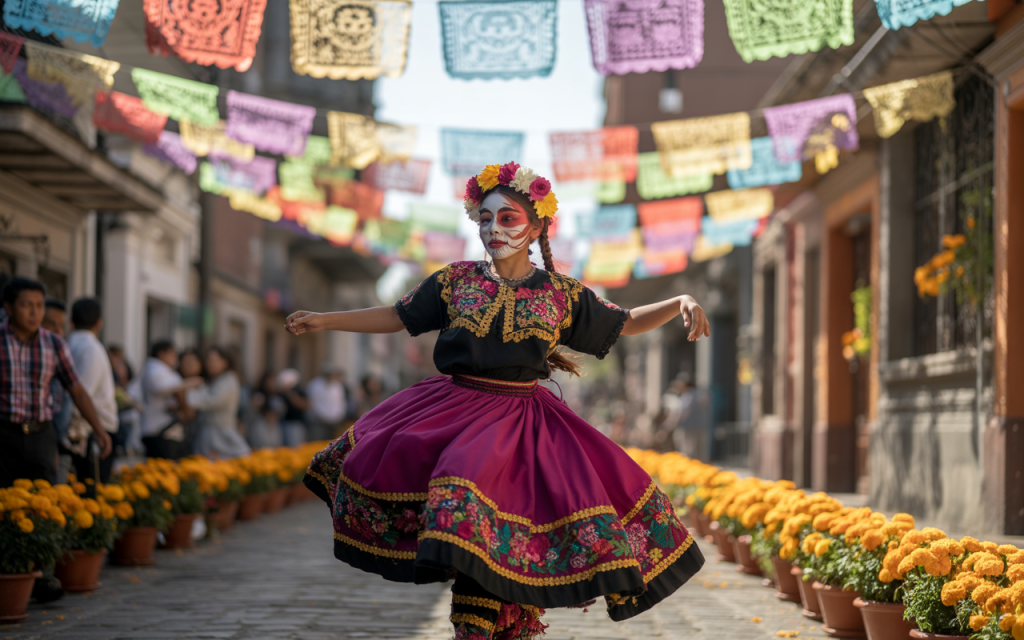
The Role of Nahuatl in Aztec and Indigenous Culture
Nahuatl culture formed the foundation of one of the Americas’ most sophisticated civilizations, creating social, political, and spiritual systems that governed millions of people across vast territories.
The language served not merely as a communication tool but as the vessel for transmitting complex worldviews that understood human existence as fundamentally interconnected with natural cycles, cosmic forces, and community responsibilities.
The concept of “teotl,” often translated as “god” or “divine force,” illustrates the sophisticated philosophical thinking embedded in Nahuatl.
Rather than representing separate deities, teotl described the dynamic, ever-changing energy that manifested in all aspects of existence.
This understanding influenced art, architecture, agriculture, governance, and daily life, creating integrated cultural systems where language, thought, and practice reinforced each other in maintaining cosmic balance and social harmony.
Nahuatl education systems, known as “telpochcalli” (for commoners) and “calmecac” (for nobles), emphasized moral development, practical skills, and cultural transmission alongside formal learning.
Students memorized extensive oral traditions, learned complex calendar systems, studied natural phenomena, and practiced artistic expressions that required deep cultural knowledge.
These educational institutions ensured that Nahuatl language carried forward not just vocabulary and grammar but entire ways of understanding and engaging with the world.
The role of Nahuatl in governing the Aztec Empire demonstrates the language’s administrative and diplomatic sophistication.
Official records, tribute lists, legal codes, and diplomatic correspondence required precise terminology for describing complex political relationships, economic systems, and social hierarchies.
This governmental use of Nahuatl created standardized forms and specialized vocabularies that influenced how speakers across different regions understood concepts of authority, justice, and civic responsibility.
Key Cultural Practices Linked to Nahuatl Groups
Contemporary Nahuatl culture maintains numerous traditional practices that demonstrate the language’s continuing role in organizing social life and transmitting cultural values.
Agricultural ceremonies mark seasonal transitions with rituals that invoke spiritual protection for crops while reinforcing community bonds through collective participation.
These ceremonies use specialized Nahuatl vocabulary that preserves ancient knowledge about weather patterns, soil management, plant varieties, and sustainable farming techniques.
Traditional healing practices represent another crucial domain where Nahuatl culture thrives. Curanderos and traditional healers maintain extensive knowledge of medicinal plants, diagnostic techniques, and therapeutic rituals that have been transmitted through Nahuatl for centuries.
The language contains precise terms for describing symptoms, identifying plant properties, and performing healing ceremonies that integrate physical, emotional, and spiritual dimensions of health and wellness.
Religious syncretism has created unique cultural expressions where pre-Columbian Nahuatl traditions blend with Catholic practices introduced during colonial times.
Community festivals often combine Christian saints’ celebrations with agricultural ceremonies, ancestral veneration, and seasonal observances that maintain distinctively Nahuatl approaches to spiritual life.
These syncretic practices require specialized vocabulary and cultural knowledge that connect contemporary communities to their historical roots while adapting to changing circumstances.
Traditional crafts including weaving, pottery, woodworking, and metalworking, preserve technical knowledge and cultural symbolism through Nahuatl terminology and instructional methods.
Artisans pass down specialized vocabulary describing tools, techniques, materials, and symbolic meanings that connect their work to broader cultural traditions.
These craft traditions often provide economic opportunities that support language maintenance while creating cultural products that reinforce community identity and pride.
Nahuatl in Mythology, Literature, and Oral Traditions
The rich tradition of Nahuatl mythology provides some of the Americas’ most sophisticated creation stories, moral teachings, and philosophical reflections.
The Popol Vuh of the Quiché Maya and the various Nahuatl creation accounts describe the formation of the world through multiple cosmic cycles, each representing different attempts by divine forces to create humanity.
These mythological narratives encode profound insights about human nature, environmental relationships, and cosmic responsibilities that continue to influence contemporary Nahuatl worldviews.
Oral traditions maintain extensive collections of stories, songs, riddles, and ceremonial speeches that preserve cultural knowledge while entertaining and educating community members.
These traditions require skilled speakers who master specialized vocabulary, narrative techniques, and performance styles that have been refined over generations.
Storytellers, known as “tlaquetzqui,” serve as cultural guardians who ensure that essential knowledge passes from elders to younger generations through engaging and memorable performances.
The concept of “flower and song” (in xochitl in cuicatl) represents a distinctive Nahuatl approach to poetry and artistic expression that understands beauty and truth as fundamentally interconnected.
Nahuatl poets created complex metaphorical systems that used natural imagery to explore philosophical questions about existence, mortality, divine nature, and human purpose.
This poetic tradition influenced visual arts, musical expressions, and ceremonial practices that continue to characterize Nahuatl cultural life.
Contemporary Nahuatl communities maintain vibrant oral traditions that adapt ancient forms to address modern concerns while preserving essential cultural elements.
New songs celebrate cultural pride, address social challenges, and strengthen community bonds, while traditional storytelling formats incorporate contemporary experiences and global perspectives.
These evolving oral traditions demonstrate Nahuatl culture’s dynamic nature and its capacity to remain relevant and meaningful in changing circumstances.
4. Nahuatl Literature and Writing System

Overview of Traditional Nahuatl Writing and Glyphs
The pre-Columbian Nahuatl writing system represented one of the Americas’ most sophisticated graphic communication systems, combining pictographic, ideographic, and phonetic elements to record complex information about history, tribute, religious practices, and astronomical observations.
Unlike purely alphabetic systems, Nahuatl writing integrated visual and textual elements that conveyed multiple layers of meaning simultaneously, creating documents that served both practical and ceremonial functions.
Traditional Nahuatl codices used standardized symbols and conventions that trained scribes learned through extensive apprenticeships in specialized schools attached to temples and governmental institutions.
These scribes, known as “tlacuilo,” possessed deep cultural knowledge that enabled them to create documents that were both functionally accurate and artistically beautiful.
Their work required understanding of religious symbolism, historical traditions, mathematical calculations, and artistic techniques that demonstrated the integration of intellectual and creative abilities in Nahuatl education.
The Nahuatl writing system employed several categories of signs including pictographs (direct visual representations), ideographs (symbols representing concepts), and phonetic glyphs (symbols representing sounds).
This combination allowed scribes to write both concrete and abstract concepts while maintaining visual connections to the cultural and natural world that surrounded them.
Place names, for example, often combined geographic features with phonetic elements that created multilayered meanings accessible to both literate specialists and broader community members familiar with local traditions.
Archaeological evidence suggests that Nahuatl writing traditions developed over many centuries, building upon earlier Mesoamerican graphic systems while developing distinctive features that reflected Nahuatl linguistic and cultural characteristics.
The widespread distribution of similar writing conventions across the Aztec Empire indicates sophisticated educational and administrative systems that maintained standardization while allowing regional variations that reflected local dialects and cultural practices.
Transition to Alphabetic Writing and Colonial Documentation
The introduction of the Latin alphabet during the early colonial period created revolutionary changes in Nahuatl literacy and documentation practices.
Spanish missionaries, recognizing Nahuatl’s importance for evangelization and administration, collaborated with indigenous scribes to develop alphabetic writing systems that could represent Nahuatl sounds using European orthographic conventions.
This transition required solving complex technical problems related to representing Nahuatl phonemes that had no equivalent in Spanish while maintaining cultural concepts that European alphabetic traditions could not easily accommodate.
The earliest alphabetic Nahuatl texts emerged during the 16th century as missionaries and indigenous scribes worked together to translate religious materials, legal documents, and historical records.
These collaborative efforts produced a remarkable corpus of colonial literature that preserved pre-Columbian knowledge while adapting to new political and religious circumstances.
Indigenous writers like Fernando Alvarado Tezozómoc and Domingo Francisco de San Antón Muñón Chimalpahin created sophisticated historical chronicles that demonstrated Nahuatl’s capacity for complex literary expression in alphabetic form.
Colonial Nahuatl documentation served multiple purposes including legal protection of indigenous land rights, preservation of historical traditions, religious instruction, and administrative communication between Spanish authorities and indigenous communities.
Thousands of documents in colonial archives demonstrate the continued vitality of Nahuatl in official contexts well into the 18th century, challenging common assumptions about indigenous language decline during colonial times.
The development of standardized alphabetic Nahuatl created new possibilities for cultural transmission and intellectual exchange while also introducing challenges related to dialectal diversity and orthographic consistency.
Different regions developed varying conventions for representing Nahuatl sounds, creating a rich but sometimes confusing legacy for contemporary language revitalization efforts that must balance historical authenticity with practical accessibility for modern learners.
Famous Nahuatl Texts
The Florentine Codex, compiled by Bernardino de Sahagún and indigenous collaborators between 1545 and 1590, represents perhaps the most comprehensive documentation of Nahuatl culture and language ever created.
This monumental work contains detailed descriptions of Aztec society, religion, natural history, and daily life recorded in both Nahuatl and Spanish, providing invaluable insights into pre-Columbian civilization while demonstrating the sophisticated intellectual capabilities of indigenous scholars and writers.
The Cantares Mexicanos, a collection of Nahuatl songs and poems compiled during the late 16th century, preserves some of the finest examples of indigenous American literature.
These texts demonstrate the philosophical depth and artistic sophistication of Nahuatl poetic traditions, addressing themes of mortality, divine nature, political power, and aesthetic beauty through complex metaphorical systems that continue to inspire contemporary writers and scholars.
The Annals of Cuauhtitlan and other indigenous historical chronicles provide detailed accounts of pre-Columbian and colonial history from Nahuatl perspectives, offering alternative narratives to European-authored accounts of conquest and cultural change.
These texts demonstrate indigenous historical consciousness and literary skill while preserving cultural knowledge that would otherwise have been lost to colonial disruption and cultural suppression.
Religious texts including the Psalmodia Christiana by Sahagún and various catechisms translated into Nahuatl reveal the complex process of religious syncretism while preserving important linguistic and cultural information.
These documents show how Nahuatl writers adapted Christian concepts to indigenous cultural frameworks while maintaining distinctively Nahuatl approaches to spiritual expression and moral instruction.
Contemporary Nahuatl Literary Works and Publications
Modern Nahuatl literature demonstrates the language’s continued vitality and creative potential through works that address contemporary themes while drawing upon traditional cultural resources.
Contemporary authors like Juan Gregorio Regino, Natalio Hernández, and Mardonio Carballo create poetry, essays, and narrational works that explore indigenous identity, environmental concerns, cultural preservation, and social justice using both traditional and innovative literary forms.
Academic institutions and cultural organizations publish Nahuatl-language materials including textbooks, literary magazines, and scholarly studies that support language education while providing platforms for contemporary writers.
Publications like “Ce-Acatl” and “Estudios de Cultura Náhuatl” create spaces for serious literary and scholarly work in Nahuatl while connecting contemporary writers to broader intellectual communities interested in indigenous languages and cultures.
Translation projects bring world literature into Nahuatl while making Nahuatl literary traditions accessible to broader audiences.
Recent translations of works by authors like Shakespeare, García Lorca, and contemporary Latin American writers demonstrate Nahuatl’s capacity for expressing diverse literary traditions while creating new vocabulary and stylistic approaches that enrich the language’s contemporary development.
Digital platforms increasingly support Nahuatl literary creation and distribution through websites, social media, and online publications that reach global audiences while connecting dispersed Nahuatl-speaking communities.
These digital initiatives often combine traditional literary forms with multimedia elements that engage younger audiences while preserving essential cultural content for future generations.
5. How Nahuatl Influences Modern Mexican Spanish and Culture

Nahuatl Words Commonly Used in Mexican Spanish
The influence of Nahuatl on Mexican Spanish represents one of the most extensive examples of indigenous language impact on European colonial languages anywhere in the Americas.
Hundreds of Nahuatl words have become integral parts of Mexican Spanish vocabulary, often without speakers’ conscious awareness of their indigenous origins.
This linguistic legacy demonstrates the profound cultural exchange that occurred during colonial times and continues to shape contemporary Mexican identity.
Food-related vocabulary shows particularly strong Nahuatl influence, reflecting the dietary traditions that indigenous peoples shared with Spanish colonizers.
Words like “chocolate” (from Nahuatl “xocolatl”), “tomate” (from “tomatl”), “aguacate” (from “ahuacatl”), “chile” (from “chili”), and “elote” (from “elotl”) represent just a few examples of culinary terms that have spread far beyond Mexico to influence Spanish vocabulary worldwide.
These words carry not only linguistic heritage but also knowledge about agricultural techniques, nutritional practices, and cultural values associated with food production and consumption.
Household and daily life vocabulary also demonstrates extensive Nahuatl influence through words like “petaca” (suitcase, from “petlacalli”), “metate” (grinding stone, from “metlatl”), “mecate” (rope, from “mecatl”), and “jacal” (hut, from “xacalli”).
These terms preserve knowledge about traditional technologies, architectural forms, and material culture that indigenous peoples developed over millennia while adapting to diverse ecological environments throughout Mesoamerica.
Geographic and place name vocabulary reveals another crucial domain of Nahuatl influence on Mexican Spanish.
Beyond the numerous place names derived from Nahuatl, terms like “chinampas” (floating gardens), “ejido” (communal land), and “milpa” (cornfield) preserve important concepts about land use, agricultural systems, and community organization that continue to influence contemporary Mexican rural life and environmental management practices.
Place Names and Their Meanings Rooted in Nahuatl
Mexico’s geographic nomenclature provides a comprehensive atlas of Nahuatl cultural influence, with thousands of place names preserving indigenous perspectives on landscape, ecology, and settlement patterns.
The name “Mexico” itself derives from “Mexihco,” referring to the place of the Mexica people, while “Guatemala” comes from “Cuauhtēmallān,” meaning “place of the eagle,” and “Nicaragua” from “Nicanahuac,” meaning “here by the water.”
Major Mexican cities bear Nahuatl names that describe their geographic features or historical significance.
“Tlaxcala” means “place of corn tortillas,” reflecting the region’s agricultural importance, while “Xochimilco” translates as “place of the flower fields,” describing the famous chinampas that still produce flowers and vegetables for Mexico City markets.
“Cuernavaca” represents a Spanish corruption of “Cuauhnāhuac,” meaning “place near the trees,” while “Acapulco” comes from “Acapolco,” meaning “place where the reeds were destroyed.”
Regional toponymy reveals detailed indigenous knowledge about local environments, resources, and cultural practices.
Place names often combine descriptive elements that identify specific geographic features (hills, rivers, caves), biological resources (plants, animals), or cultural activities (markets, temples, agricultural areas) that were important to indigenous communities.
This naming system created a linguistic landscape that encoded practical knowledge while reinforcing cultural connections to specific territories.
Contemporary efforts to reclaim original indigenous place names reflect broader movements for cultural recognition and historical justice.
Some communities and scholars advocate for restoring pre-Columbian names or at least recognizing their indigenous origins, while others work to educate people about the meanings embedded in familiar place names that connect contemporary Mexico to its indigenous heritage.
Nahuatl’s Enduring Cultural Footprint in Mexico and Beyond
The cultural influence of Nahuatl extends far beyond vocabulary to shape fundamental aspects of Mexican national identity, artistic expression, and cultural practices that distinguish Mexico within the broader Spanish-speaking world.
Revolutionary and post-revolutionary Mexican nationalism explicitly drew upon Aztec and indigenous symbolism to create distinctive national narratives that emphasized Mexico’s unique cultural heritage while differentiating it from European colonial traditions.
Mexican cuisine demonstrates profound Nahuatl influence through ingredients, preparation techniques, and cultural practices that remain central to contemporary food culture.
The “nixtamalization” process for preparing corn, the use of indigenous spices and vegetables, traditional cooking methods using metates and comales, and ceremonial aspects of food sharing all reflect cultural practices that developed in Nahuatl-speaking communities over centuries before spreading throughout Mexican society.
Artistic and craft traditions show continuing Nahuatl influence through techniques, materials, symbolic systems, and aesthetic principles that distinguish Mexican cultural production.
Traditional textiles, pottery, metalworking, and other crafts often employ designs, colors, and symbolic elements that originated in pre-Columbian Nahuatl culture while adapting to contemporary markets and artistic innovations.
The global spread of Mexican cultural elements through migration, tourism, and cultural exchange has carried Nahuatl influences to communities worldwide.
Mexican restaurants, cultural festivals, and artistic expressions introduce international audiences to cultural elements that often have deep roots in Nahuatl traditions, creating global appreciation for indigenous Mexican cultural contributions while sometimes obscuring their specific historical and cultural origins.
6. Learning Nahuatl: Resources and Tips

Why Learn Nahuatl Today?
Learning Nahuatl offers unique intellectual, cultural, and personal benefits that extend far beyond simple language acquisition.
From a cognitive perspective, Nahuatl’s agglutinative structure and complex grammatical systems provide excellent mental exercise while offering insights into alternative ways of organizing and expressing human thought.
The language’s sophisticated use of metaphor, its precise vocabulary for describing natural phenomena, and its integrated approach to temporal and spatial relationships can expand learners’ conceptual frameworks and creative thinking abilities.
Cultural understanding represents another compelling reason to study Nahuatl. The language provides direct access to one of the Americas’ most sophisticated literary and philosophical traditions, allowing learners to engage with indigenous perspectives on history, spirituality, social organization, and human-environment relationships without the distortions introduced by translation.
This cultural knowledge enriches understanding of Mexican history, contemporary indigenous movements, and broader questions about cultural diversity and human adaptation.
For people of Mexican or broader Latin American heritage, learning Nahuatl can provide meaningful connections to ancestral traditions while supporting contemporary indigenous communities’ efforts to maintain and revitalize their cultural heritage.
Many learners report that studying Nahuatl helps them understand their own cultural identity more deeply while developing greater appreciation for the indigenous foundations of contemporary Latin American societies.
Professional and academic opportunities increasingly value indigenous language skills, particularly in fields like anthropology, archaeology, history, linguistics, education, and social work.
Nahuatl proficiency can enhance research capabilities, improve cultural competency in working with indigenous communities, and provide unique qualifications for academic and professional positions focused on Latin American studies, indigenous rights, or cultural preservation.
Recommended Books, Online Courses, and Apps
Traditional print resources provide foundational materials for serious Nahuatl study, with several excellent textbooks offering systematic introductions to grammar, vocabulary, and cultural context.
“A Nahuatl-English Dictionary and Concordance to the Cantares Mexicanos” by John Bierhorst provides comprehensive lexical resources, while “Lessons in Nahuatl” by J. Richard Andrews offers systematic grammatical instruction with extensive exercises and cultural information.
University courses increasingly offer Nahuatl instruction, with institutions like the Universidad Nacional Autónoma de México (UNAM), UCLA, University of Utah, and Tulane University providing both introductory and advanced classes taught by qualified instructors.
These formal educational programs offer structured learning environments, access to specialized resources, and opportunities to connect with other students and scholars interested in Nahuatl studies.
Digital resources have revolutionized Nahuatl learning accessibility through online dictionaries, mobile applications, and interactive educational platforms.
The “Nahuatl Dictionary” app provides portable access to extensive vocabulary resources, while websites like “Modern Nahuatl” offer free lessons, audio recordings, and cultural information suitable for self-directed learners at various proficiency levels.
Online communities and social media platforms create opportunities for learners to practice Nahuatl while connecting with speakers and other students worldwide.
Facebook groups, Discord servers, and specialized forums provide spaces for asking questions, sharing resources, practicing conversation, and participating in cultural discussions that enhance language learning while building supportive communities of learners and speakers.
Communities and Cultural Centers Supporting Nahuatl Learners
Indigenous communities throughout Mexico increasingly offer cultural programs that welcome non-indigenous learners interested in respectful engagement with Nahuatl language and culture.
These community-based programs often provide the most authentic and culturally grounded learning experiences while supporting local economic development and cultural preservation efforts.
Learners should approach these opportunities with appropriate humility, cultural sensitivity, and genuine commitment to supporting community priorities.
Cultural centers in major cities often host Nahuatl classes, workshops, and cultural events that create accessible entry points for urban learners.
Organizations like Casa de la Cultura Náhuatl in Mexico City, various indigenous cultural centers in U.S. cities with significant Mexican populations, and university-based indigenous studies programs provide structured learning opportunities along with broader cultural programming that contextualizes language learning within contemporary indigenous experiences.
Academic conferences and workshops offer intensive learning opportunities for serious students, with events like the annual meetings of indigenous language organizations providing access to expert instruction, cutting-edge research, and networking opportunities with scholars and activists working in Nahuatl revitalization.
These professional development opportunities often provide the most current methodological approaches and theoretical frameworks for understanding Nahuatl linguistics and culture.
International educational programs and cultural exchange initiatives create opportunities for immersive learning experiences that combine language instruction with cultural immersion and community engagement.
These programs, when developed in genuine partnership with indigenous communities, can provide transformative educational experiences while contributing to local economic development and cultural preservation efforts.
7. Frequently Asked Questions (FAQ) About Nahuatl
Q: Is Nahuatl still spoken today, and how many people speak it?
Yes, Nahuatl remains a vibrant living language with approximately 1.7 million speakers primarily concentrated in central Mexico.
This makes it the most widely spoken indigenous language in Mexico and one of the most vital indigenous languages in all of the Americas.
Speakers are distributed across multiple states including Puebla, Veracruz, Hidalgo, San Luis Potosí, and Guerrero, with significant populations also found in urban areas like Mexico City due to migration patterns.
Q: How difficult is Nahuatl to learn for English or Spanish speakers?
Nahuatl presents unique challenges and advantages for speakers of European languages. The agglutinative structure, where complex words are built by combining multiple meaningful elements, differs significantly from English and Spanish grammar but creates logical patterns once understood.
The phonological system is relatively straightforward for Spanish speakers, though English speakers may need to master sounds like the “tl” combination.
The rich metaphorical vocabulary and cultural concepts embedded in the language require cultural study alongside linguistic learning, but this cultural depth makes the learning process intellectually rewarding.
Q: What’s the difference between Classical Nahuatl and modern Nahuatl varieties?
Classical Nahuatl refers to the standardized form of the language used in the Aztec Empire and early colonial documents, primarily from the central Mexico region around Tenochtitlan.
Modern Nahuatl encompasses over 30 distinct varieties with varying degrees of mutual intelligibility, ranging from closely related dialects to substantially different regional languages.
While Classical Nahuatl provides historical and literary importance, contemporary learners often benefit from studying the specific variety spoken in communities where they plan to engage, as each modern variety reflects unique historical developments and cultural adaptations.
Q: Are there any famous works of literature originally written in Nahuatl?
Nahuatl boasts a rich literary tradition including the Cantares Mexicanos, a collection of sophisticated poetry exploring themes of mortality, beauty, and divine nature through complex metaphorical systems.
The Florentine Codex represents perhaps the most comprehensive documentation of indigenous American culture and includes extensive Nahuatl texts alongside Spanish translations.
Historical chronicles by indigenous authors like Chimalpahin and Tezozómoc demonstrate the language’s capacity for complex historical and political analysis.
Contemporary authors continue this tradition with modern poetry, essays, and narrational works that address current themes while drawing upon traditional cultural resources.
Q: How has Nahuatl influenced English and other languages besides Spanish?
While Nahuatl’s most extensive influence appears in Mexican Spanish, the language has contributed words to English and other global languages primarily through Spanish mediation and later direct contact.
English words like “chocolate,” “tomato,” “avocado,” “coyote,” and “chili” all derive from Nahuatl origins. Place names throughout the southwestern United States reflect Nahuatl influence through Spanish colonial naming practices.
In recent decades, increased academic interest and cultural awareness have introduced additional Nahuatl concepts and terminology into international scholarly discourse, particularly in fields like anthropology, archaeology, and indigenous studies.
Q: Can Nahuatl be written, and what writing system does it use today?
Modern Nahuatl uses the Latin alphabet, adapted from systems developed during the colonial period when Spanish missionaries worked with indigenous scribes to create alphabetic writing conventions.
However, standardization remains challenging due to dialectal diversity, with different regions sometimes using varying orthographic conventions.
Pre-Columbian Nahuatl used a sophisticated system combining pictographic, ideographic, and phonetic elements visible in codices and stone inscriptions.
Contemporary revitalization efforts work to balance historical authenticity with practical accessibility, often developing standardized writing systems that can accommodate multiple dialectal variations.
Q: What role does Nahuatl play in Mexican national identity?
Nahuatl holds significant symbolic importance in Mexican national identity, particularly since the Mexican Revolution when nationalist movements explicitly drew upon Aztec and indigenous heritage to distinguish Mexico from European colonial traditions.
The Mexican flag features an Aztec symbol, many government buildings display Nahuatl motifs, and official rhetoric often celebrates pre-Columbian achievements.
However, this symbolic recognition doesn’t always translate into practical support for contemporary Nahuatl-speaking communities, creating tension between nationalist appropriation of indigenous symbols and genuine support for indigenous language and cultural rights.
Q: Are there any Nahuatl words that don’t translate well into English or Spanish?
Nahuatl contains numerous concepts that resist direct translation because they encode different ways of understanding reality, time, space, and human relationships.
The concept “teotl” encompasses dynamic divine energy that manifests throughout existence, differing from European notions of separate deities.
Temporal expressions often integrate cyclical and linear time concepts simultaneously. Many plant and animal terms describe not just biological species but their cultural, medicinal, and spiritual significance within indigenous knowledge systems.
These translation challenges reflect fundamental differences in worldview and cultural organization that make Nahuatl study intellectually enriching but culturally demanding.
Conclusion
Recap of the Enduring Legacy and Importance of Nahuatl
The Nahuatl language represents far more than a communication system—it embodies one of humanity’s most sophisticated approaches to understanding and organizing human experience.
From its origins in the Uto-Aztecan language family through its golden age as the administrative language of the Aztec Empire to its contemporary vitality among 1.7 million speakers, Nahuatl has demonstrated remarkable resilience and adaptability while maintaining essential cultural knowledge that remains relevant to contemporary global challenges.
The historical significance of Classical Nahuatl cannot be overstated. This was the language that enabled the creation of one of the Americas’ most complex civilizations, facilitating governance across vast territories, sophisticated agricultural systems, remarkable architectural achievements, and philosophical traditions that continue to offer valuable insights into alternative ways of organizing society and understanding human relationships with the natural world.
The extensive literary tradition preserved in colonial documents demonstrates intellectual achievements that rival any global civilization while providing unique perspectives on history, spirituality, and human nature.
Contemporary Nahuatl culture continues to evolve and adapt while maintaining connections to ancestral knowledge systems that offer valuable alternatives to dominant global cultural patterns. Indigenous communities using Nahuatl maintain sustainable agricultural practices, traditional healing systems, community organization models, and spiritual traditions that provide important resources for addressing contemporary challenges related to environmental degradation, social inequality, and cultural homogenization.
Their persistence in maintaining these traditions despite centuries of pressure demonstrates remarkable cultural strength and offers hope for global cultural diversity.
The influence of Nahuatl on Mexican Spanish and broader Mexican culture illustrates the profound impact that indigenous languages can have on national identity and cultural development.
The hundreds of Nahuatl words that have become integral parts of Mexican Spanish, the place names that connect contemporary geography to indigenous heritage, and the cultural practices that continue to influence Mexican life demonstrate that indigenous contributions to Latin American civilization extend far beyond historical curiosities to shape contemporary reality in fundamental ways.
Call to Action: Support and Learn About This Rich Indigenous Language
The future vitality of Nahuatl depends upon actions taken by both Nahuatl-speaking communities and broader society to support language maintenance, cultural transmission, and intergenerational learning.
Non-indigenous people can contribute to these efforts through respectful engagement with Nahuatl language learning, support for indigenous rights and cultural programs, advocacy for educational policies that recognize indigenous languages, and consumer choices that support indigenous communities’ economic development efforts.
Educational institutions at all levels can play crucial roles by incorporating Nahuatl language and culture into curricula, supporting research that documents and analyzes Nahuatl linguistic and cultural traditions, providing platforms for indigenous scholars and community experts, and developing collaborative programs that serve community-identified priorities rather than external academic interests.
These educational initiatives can help prepare future generations to engage respectfully and effectively with indigenous communities while building broader social appreciation for linguistic and cultural diversity.
Digital technologies offer unprecedented opportunities for supporting Nahuatl revitalization through online learning platforms, social media communities, digital archives, mobile applications, and multimedia resources that can reach global audiences while connecting dispersed Nahuatl-speaking communities.
Technology developers, content creators, and digital platform managers can contribute by ensuring that indigenous languages receive appropriate technical support and by developing tools that serve community needs rather than external commercial interests.
Government policies at local, national, and international levels significantly impact indigenous language vitality through education funding, cultural program support, legal recognition, and economic development initiatives.
Citizens can advocate for policies that support indigenous rights, multilingual education, cultural preservation programs, and economic opportunities that enable indigenous communities to maintain their languages while participating fully in broader economic and political systems.
Perhaps most importantly, everyone can contribute to Nahuatl’s future by developing genuine curiosity about and respect for indigenous knowledge systems, cultural traditions, and contemporary experiences.
This means moving beyond superficial appreciation for indigenous “contributions” to dominant culture toward deeper understanding of indigenous perspectives as valuable alternatives that can enrich everyone’s understanding of human possibilities and responsibilities.
The survival and flourishing of Nahuatl—like all indigenous languages—ultimately depends upon creating social conditions where indigenous communities can maintain their cultural traditions with dignity, pride, and economic security while engaging with broader society on terms of genuine respect and equality.
This requires ongoing commitment from both indigenous and non-indigenous people to building relationships based on mutual learning, shared responsibility, and recognition of the valuable contributions that linguistic and cultural diversity makes to human civilization’s future development.
Source: Instituto Nacional de Lenguas Indígenas (INALI)
Related Post: Family words in Nahuatl Language


