

The Igbo people, one of Nigeria’s largest ethnic groups, embody a vibrant and enduring cultural heritage that has flourished for millennia.
Primarily inhabiting the southeastern region of Nigeria, the Igbo people comprise over 40 million individuals who share common linguistic, cultural, and historical bonds.
Their ancestral homeland spans across states including Anambra, Enugu, Imo, Abia, and Ebonyi, with significant populations extending into parts of Delta, Rivers, and Cross River states.
The significance of Igbo culture extends far beyond Nigeria’s borders, influencing African continental identity and contributing substantially to global cultural diversity.
Known for their entrepreneurial spirit, democratic governance systems, and vibrant artistic expressions, the Igbo people have maintained their cultural distinctiveness while adapting to modern realities.
Their influence can be traced through the African diaspora, particularly in the Americas, where enslaved Igbo people carried elements of their culture that continue to resonate today.
This comprehensive exploration aims to illuminate the multifaceted dimensions of Igbo traditions, social customs, artistic expressions, religious beliefs, and contemporary life.
From the sacred rituals of ancestor worship to the colorful celebrations of harvest festivals, from the intricate social hierarchies to the profound philosophical concepts embedded in their language, Igbo culture offers a window into one of Africa’s most dynamic and resilient civilizations.
Understanding Igbo culture is essential for appreciating the broader narrative of African heritage and the ongoing dialogue between tradition and modernity that shapes contemporary Nigerian society. Let’s explore the Igbo Culture!
History and Origins

The historical roots of the Igbo people stretch back thousands of years, with archaeological evidence suggesting continuous habitation of the southeastern Nigerian region since at least 3000 BCE.
The Nri Kingdom, established around the 10th century CE, stands as one of the earliest and most significant Igbo political entities, serving as a spiritual and cultural center that influenced surrounding communities.
Unlike many African societies that developed centralized monarchies, the Igbo evolved a unique republican system characterized by village democracies and age-grade associations.
Archaeological discoveries at sites like Igbo-Ukwu have revealed sophisticated bronze-working techniques and elaborate burial practices dating to the 9th-10th centuries, indicating a highly developed civilization with extensive trade networks.
These findings suggest that the Igbo were accomplished metallurgists and traders who maintained commercial relationships across West Africa and possibly beyond.
The intricate bronze vessels, ornaments, and ceremonial objects discovered at these sites demonstrate the artistic and technological sophistication of early Igbo society.
The pre-colonial period witnessed various migration patterns within Igboland, with different communities establishing autonomous villages and towns.
These migrations were often driven by population growth, agricultural opportunities, or conflicts, leading to the dispersal and settlement of Igbo-speaking peoples across a wide geographical area.
Each settlement typically developed its own local variations in dialect, customs, and governance while maintaining core Igbo cultural elements.
The arrival of European colonizers in the late 19th century marked a significant turning point in Igbo history. The British colonial administration struggled to understand and control the decentralized Igbo political system, eventually imposing artificial boundaries and foreign governance structures.
This period saw the introduction of Christianity, Western education, and new economic systems that would profoundly impact traditional Igbo society.
The colonial experience shaped modern Igbo identity, fostering both resistance to foreign domination and adaptation to global influences that continue to define contemporary Igbo culture.
Language and Communication

The Igbo language, classified within the Niger-Congo language family, serves as the cornerstone of Igbo cultural identity and communication.
With approximately 27 million native speakers, Igbo ranks among Nigeria’s major languages and exhibits remarkable dialectical diversity across its geographical range.
The language encompasses numerous dialects, including Owerri, Umuahia, Onitsha, Nsukka, and Anambra variants, each reflecting local cultural nuances while maintaining mutual intelligibility.
Central Igbo, based primarily on the Owerri dialect, has emerged as the standardized form used in education, literature, and media.
However, this standardization process has generated ongoing debates about linguistic authenticity and cultural representation, as different Igbo communities seek to preserve their distinct dialectical heritage.
The tonal nature of the Igbo language, with its high, low, and step tones, adds layers of meaning to communication and requires careful attention to pronunciation and context.
Proverbs occupy a sacred place in Igbo communication, serving as vehicles for wisdom transmission, moral instruction, and social commentary.
These metaphorical expressions, known as “ilu” in Igbo, encapsulate generations of accumulated knowledge and provide frameworks for understanding complex life situations.
Popular proverbs like “Onye aghala nwanne ya” (one should not abandon their brother/sister) reinforce community solidarity, while others offer guidance on proper conduct, relationships, and decision-making.
Oral traditions and storytelling represent fundamental aspects of Igbo cultural preservation and education.
Through folktales, historical narratives, and praise songs, elders transmit cultural values, moral lessons, and community history to younger generations.
These oral performances often incorporate music, dance, and dramatic elements, creating immersive experiences that engage listeners emotionally and intellectually.
The tradition of evening storytelling sessions, where families gather to share tales and wisdom, continues to play a vital role in maintaining cultural continuity despite modern technological influences.
Social Structure and Community
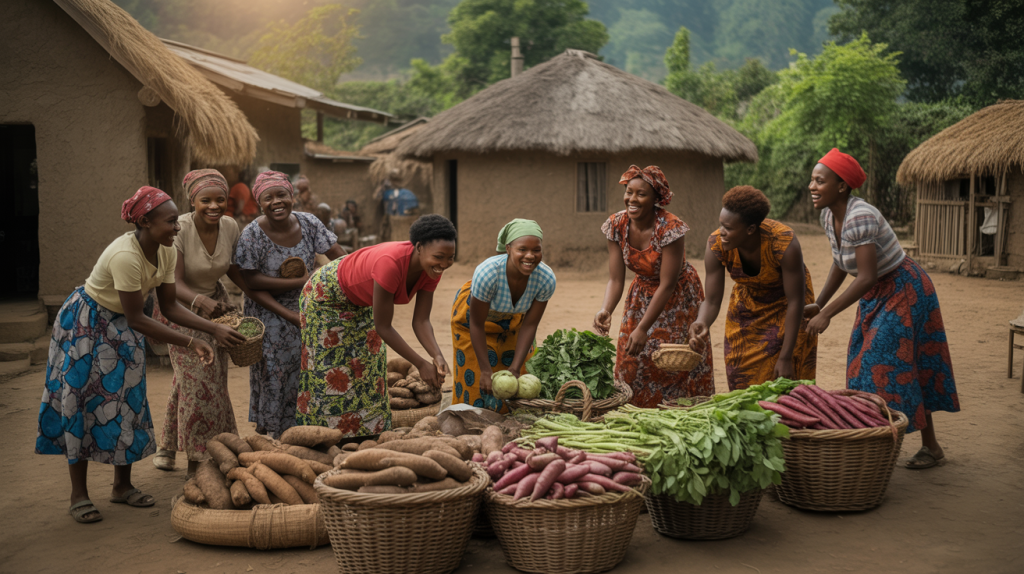
Igbo society operates through a complex yet flexible social structure that balances individual achievement with collective responsibility.
The extended family system forms the basic unit of social organization, with kinship ties extending through patrilineal descent groups called “umunna.”
These kinship networks create networks of mutual support, shared resources, and collective decision-making that have sustained Igbo communities for generations.
The family structure traditionally centers around the compound system, where related families live in close proximity, sharing common spaces for ceremonies, discussions, and daily activities.
Within this structure, age and gender play significant roles in determining responsibilities and privileges.
Elders command respect and authority, serving as repositories of wisdom and arbiters of disputes. Their counsel is sought on matters ranging from marriage negotiations to land disputes, and their blessing is considered essential for important undertakings.
The age-grade system represents one of the most distinctive features of Igbo social organization. Young people of similar ages form cohorts that progress through various stages of responsibility and privilege as they mature.
These age grades undertake community projects, provide security, and serve as forums for peer education and support.
The progression through age grades creates a natural leadership pipeline while ensuring that community responsibilities are shared equitably among generations.
Title-taking systems, including the prestigious Ozo, Nze, and Eze titles, provide pathways for social recognition and community leadership.
These titles are not inherited but earned through demonstrated character, achievement, and community contribution.
The Ozo title, in particular, represents the highest traditional honor, requiring significant financial investment in community ceremonies and ongoing obligations to serve the common good.
Title holders are expected to exemplify moral leadership, mediate disputes, and support community development initiatives.
The democratic nature of these institutions reflects the broader Igbo commitment to merit-based advancement and collective governance, distinguishing their society from more hierarchical African political systems.
Religion and Spiritual Beliefs

Traditional Igbo religion, known as Odinani, presents a sophisticated theological system that has guided Igbo spiritual life for millennia.
At its apex stands Chukwu, the supreme deity whose name literally means “Great Spirit” or “Great God.”
Chukwu is conceptualized as the ultimate creator and source of all existence, transcendent yet immanent in the natural world.
Unlike anthropomorphic deities, Chukwu is understood as pure spirit, beyond human form yet intimately involved in human affairs through various intermediary forces and deities.
Ala, the earth goddess, occupies a central position in Igbo cosmology as the divine force governing morality, fertility, and community life. She is simultaneously the spiritual mother of the people and the ultimate judge of human conduct.
Ala’s laws, known as “omenala,” form the foundation of traditional Igbo ethics and social order. Violations of these sacred laws are believed to bring consequences not only to individuals but to entire communities, necessitating purification rituals and reparations to restore cosmic balance.
The pantheon of Alusi (deities) includes numerous specialized spirits governing different aspects of human experience.
Amadioha controls thunder and justice, Idemili governs rivers and commerce, and Ekwensu represents trickery and testing.
These deities are not worshipped as separate entities but understood as manifestations of divine energy operating in specific domains.
Shrines and sacred groves dedicated to various Alusi serve as focal points for community worship, divination, and ritual activities.
Ancestor worship forms another crucial dimension of Igbo spirituality, reflecting the belief that death does not sever the bonds between the living and deceased family members.
Ancestors, called “Ndị Ichie,” are venerated as intermediaries who can intercede with the divine realm on behalf of their descendants.
Regular offerings, prayers, and ceremonies honor these ancestral spirits while seeking their guidance and protection.
The contemporary integration of Christianity with traditional beliefs has created syncretic practices where many Igbo people maintain respect for ancestral traditions while embracing Christian worship, demonstrating the adaptive nature of Igbo spirituality in modern contexts.
Festivals and Celebrations
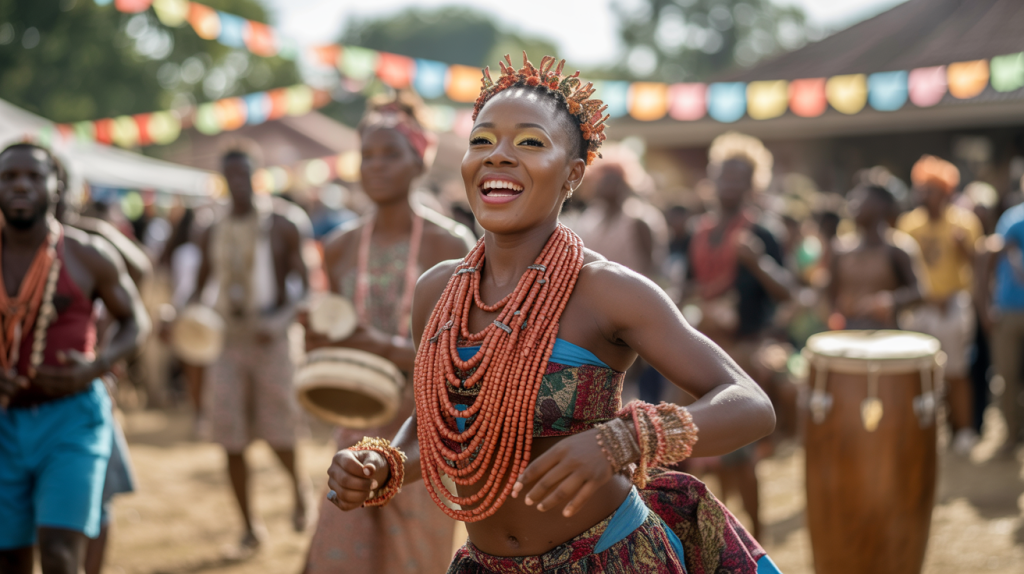
The New Yam Festival, known as Iri Ji or Iwa Ji, stands as the most significant celebration in the Igbo cultural calendar, marking the beginning of the yam harvest season and honoring the earth goddess Ala.
This festival typically occurs between August and October, varying by community and agricultural conditions.
The celebration begins with elaborate preparations including the cleaning of compounds, preparation of special foods, and the gathering of family members from near and far.
The ceremonial eating of the new yam by the eldest male in each household signals the community’s permission for everyone to partake in the harvest.
During Iri Ji, communities showcase their cultural heritage through traditional dances, music performances, and competitive displays.
Wrestling matches between young men from different villages provide entertainment while demonstrating physical prowess and community pride.
The festival serves multiple functions: it’s a thanksgiving ceremony for successful harvests, a time for community bonding, and an opportunity for the diaspora to reconnect with their roots.
Elaborate feasts featuring various yam preparations, accompanied by palm wine and other traditional delicacies, strengthen social bonds and celebrate abundance.
Other important festivals punctuate the Igbo calendar, each serving specific cultural and spiritual purposes.
The Onwa Asaa (seventh month) festival celebrates the clearing of farmland and planting season, while various communities observe festivals dedicated to local deities and historical events.
These celebrations often feature elaborate market displays, cultural competitions, and ceremonies that reinforce community identity and values.
Masquerades occupy a unique and essential place in Igbo festival celebrations, representing the physical manifestation of ancestral spirits among the living.
These performances are categorized into “visible” masquerades that provide entertainment and “invisible” masquerades that carry out sacred religious functions.
The visible masquerades, such as the colorful Ijele and acrobatic Atilogwu performances, captivate audiences with their artistic beauty and skilled choreography.
Invisible masquerades, including the fearsome Ekpo and mysterious Mmuo spirits, maintain social order by enforcing community laws and mediating disputes.
The intricate masks, costumes, and ritual preparations associated with masquerades represent centuries of artistic tradition and spiritual symbolism, making these performances central to maintaining the connection between the physical and spiritual realms in Igbo cosmology.
Customs and Traditions
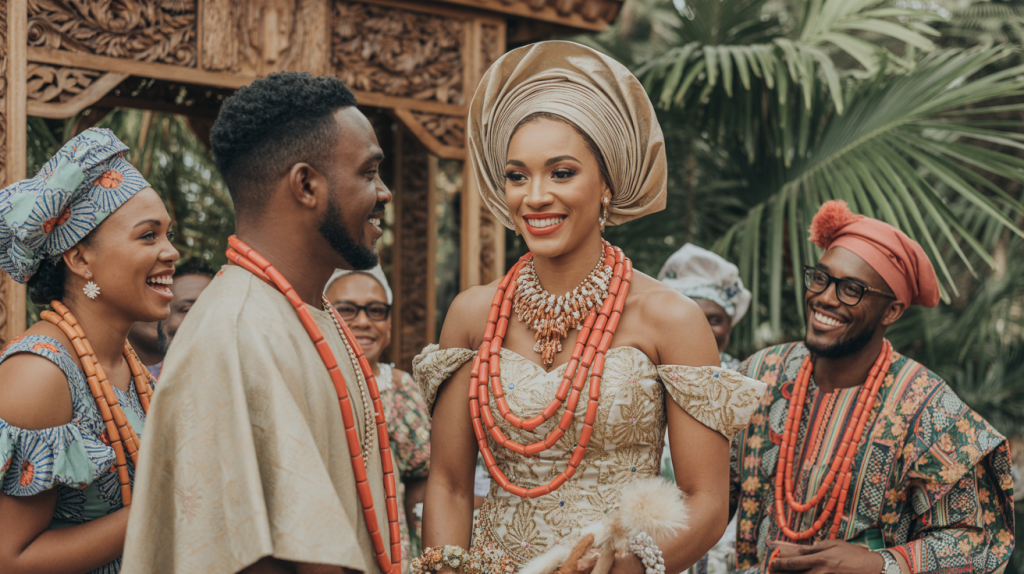
Traditional Igbo marriage customs represent one of the culture’s most elaborate and meaningful ceremonial processes, encompassing multiple stages that strengthen bonds between families and communities.
The journey begins with the formal introduction ceremony, where the prospective groom’s family officially presents their intentions to the bride’s family.
This initial meeting, conducted with great ceremony and respect, involves the presentation of kola nuts, palm wine, and other symbolic gifts that demonstrate the suitor’s serious intentions and cultural awareness.
The wine-carrying ceremony, known as Igbankwu or Ime Ego, constitutes the heart of traditional Igbo marriage proceedings.
During this elaborate celebration, the bride, adorned in her finest traditional attire and accompanied by her female relatives, searches among the assembled men to identify and serve palm wine to her chosen husband.
This symbolic act publicly declares her choice while honoring both families’ involvement in the union.
The ceremony includes extensive gift exchanges, traditional music and dance performances, and the formal blessing of the union by elders from both families.
The kola nut ceremony represents perhaps the most sacred and ubiquitous ritual in Igbo culture, serving as the foundation for all significant gatherings and social interactions.
The presentation, blessing, and sharing of kola nuts follow strict protocols that reflect social hierarchies, spiritual beliefs, and community values.
The eldest person present traditionally receives the honor of breaking the kola nut after offering prayers for peace, prosperity, and divine blessing upon all participants.
This ritual creates a sacred space that transforms ordinary gatherings into meaningful communal experiences.
Igbo burial rites and funeral practices reflect deep spiritual beliefs about the continuity of life and the honored status of deceased community members.
Traditional burials involve elaborate ceremonies that can span several days, featuring cultural performances, feasting, and ritual activities designed to ensure the deceased’s peaceful transition to the ancestral realm.
The deceased’s age, achievements, and social status influence the scale and nature of funeral celebrations, with titled individuals receiving particularly elaborate honors.
Modern adaptations of these practices incorporate Christian elements while maintaining core cultural components, demonstrating the ongoing evolution of Igbo traditions in contemporary contexts.
Art, Music, and Dance

Igbo artistic traditions encompass a rich variety of visual and performing arts that serve both aesthetic and functional purposes within the cultural framework.
Traditional art forms include intricate wood carving, bronze casting, pottery, and textile production, each carrying deep symbolic meanings and cultural significance. T
he famous Igbo-Ukwu bronze artifacts, dating back over a millennium, demonstrate the sophisticated artistic and technical skills of early Igbo craftspeople.
These elaborate vessels, ornaments, and ceremonial objects showcase complex decorative patterns and advanced metallurgical techniques that rival contemporary artistic achievements.
Mask-making represents one of the most distinctive Igbo art forms, with different types of masks serving various cultural and spiritual functions.
Artistic masks range from the beautiful maiden spirit masks (Agbogho Mmuo) that represent idealized feminine beauty to the fearsome warrior masks used in masquerade performances.
Each mask incorporates specific colors, patterns, and materials that convey particular meanings and invoke specific spiritual forces.
The creation of these masks requires not only artistic skill but also deep cultural knowledge and spiritual preparation, as many are believed to become vessels for ancestral spirits during ceremonial use.
Traditional Igbo music encompasses a wide range of vocal and instrumental forms that accompany various social and spiritual activities.
Musical instruments include the wooden slit drum (ekwe), clay pot drum (udu), xylophone (alo), and various types of flutes and stringed instruments.
These instruments often accompany call-and-response singing patterns that encourage community participation and create powerful emotional connections among participants.
Music serves multiple functions in Igbo culture: it accompanies work activities to maintain rhythm and motivation, provides the soundtrack for celebrations and ceremonies, and serves as a vehicle for storytelling and cultural transmission.
The Atilogwu dance represents one of the most celebrated and internationally recognized forms of Igbo cultural expression.
This energetic and acrobatic performance combines athletic skill with artistic beauty, featuring rapid movements, synchronized choreography, and colorful costumes.
Atilogwu dancers undergo rigorous training to master the complex movements and develop the stamina required for these demanding performances.
The dance serves as both entertainment and cultural ambassador, representing Igbo culture at festivals, competitions, and cultural events worldwide while inspiring pride and cultural connection among Igbo people globally.
Cuisine
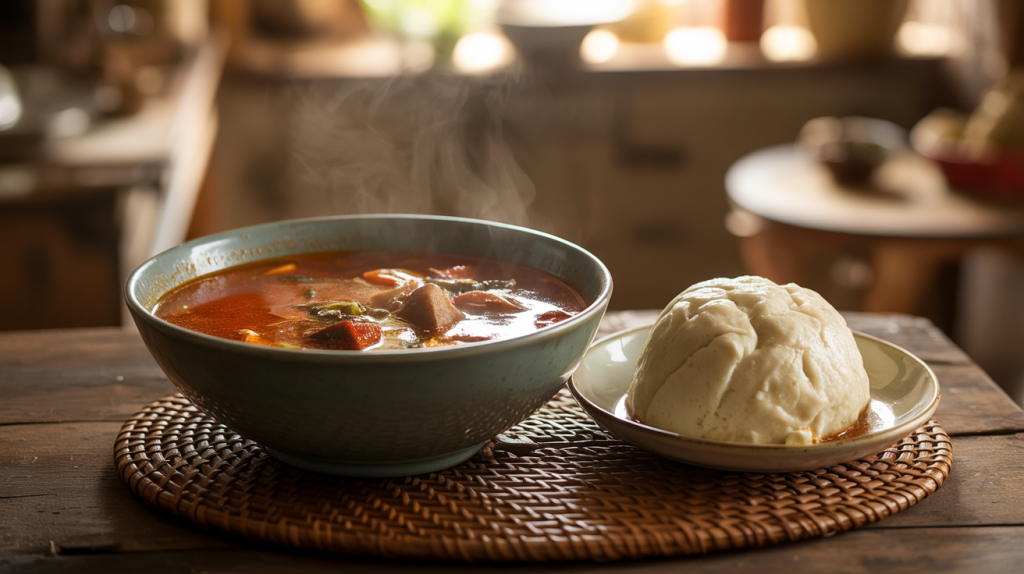
Igbo cuisine reflects the agricultural abundance and cultural diversity of southeastern Nigeria, featuring a rich array of dishes that combine local ingredients with sophisticated cooking techniques passed down through generations.
The foundation of Igbo food culture rests on staple crops including yam, cassava, cocoyam, plantain, and various leafy vegetables that thrive in the region’s favorable climate.
These ingredients are transformed through traditional cooking methods that preserve nutritional value while creating complex flavors and textures that define authentic Igbo cuisine.
Yam holds special significance in Igbo food culture, earning recognition as the “king of crops” due to its nutritional value and cultural importance.
Various yam preparations include pounded yam (ji elo), yam porridge (ji mmiri), and roasted yam served with palm oil sauce and vegetables.
The versatility of yam allows for numerous cooking methods, from simple boiling to elaborate preparations that incorporate meat, fish, and vegetables.
The annual New Yam Festival celebrates this important crop while showcasing the creativity and skill of Igbo cooks in preparing traditional yam dishes.
Popular Igbo dishes demonstrate the culture’s emphasis on communal eating and flavor complexity. Jollof rice, while common across West Africa, features distinctive Igbo variations that incorporate local spices and cooking techniques.
Ofe Nsala (white soup), made with yam, meat or fish, and various spices, represents a delicate and flavorful dish often served at special occasions.
Bitter leaf soup (Ofe Onugbu) combines nutritious vegetables with protein sources to create hearty meals that nourish both body and soul.
These dishes require skill and patience to prepare properly, making cooking expertise a valued cultural accomplishment.
The role of communal eating in Igbo culture extends far beyond simple nutrition to encompass social bonding, cultural transmission, and spiritual significance.
Traditional meals are shared from common bowls, reinforcing community solidarity and equality among participants.
Special foods are prepared for ceremonies, festivals, and important gatherings, with elaborate feasts serving as expressions of hospitality, celebration, and cultural pride.
The preparation and sharing of food create opportunities for intergenerational knowledge transfer, as older women teach younger family members traditional recipes, cooking techniques, and the cultural significance of various dishes.
Economy and Livelihood

Traditional Igbo economic systems centered on agriculture, trade, and specialized crafts that supported diverse and resilient communities.
Yam farming formed the backbone of the traditional economy, with successful yam cultivation serving as a measure of masculine achievement and social status.
The agricultural calendar governed much of traditional Igbo life, from religious ceremonies to social activities, with the growing season determining work patterns and community gatherings.
Beyond yams, Igbo farmers cultivated cassava, cocoyam, maize, beans, and various vegetables that provided food security and trade opportunities.
The Igbo people developed sophisticated trading networks that extended across West Africa and beyond, establishing markets and commercial relationships that facilitated cultural exchange and economic prosperity.
Traditional markets, held on four-day cycles following the Igbo week system, served as centers for economic activity and social interaction.
These markets brought together people from different communities, creating opportunities for trade, information exchange, and cultural contact that enriched Igbo society.
The entrepreneurial spirit evident in traditional trading practices laid the foundation for contemporary Igbo business success both within Nigeria and internationally.
Specialized crafts and industries supplemented agricultural activities, creating diverse economic opportunities within Igbo communities.
Blacksmithing, pottery, weaving, and wood carving provided essential goods while supporting artisan specialists who maintained technical knowledge and artistic traditions.
These crafts often followed family lines, with skills passed from generation to generation through apprenticeship systems that preserved both technical expertise and cultural knowledge.
The quality and reputation of local craftspeople contributed to regional trade networks and cultural identity.
Modern Igbo economic adaptation demonstrates remarkable continuity with traditional entrepreneurial values while embracing contemporary opportunities and challenges.
Igbo people have achieved significant success in various sectors of the Nigerian economy, including commerce, manufacturing, transportation, and professional services.
The strong cultural emphasis on education has produced generations of doctors, lawyers, engineers, and academics who contribute to national development while maintaining cultural connections.
The global Igbo diaspora has established successful businesses and professional practices worldwide, creating networks that support both individual advancement and community development.
This economic dynamism reflects traditional values of hard work, innovation, and mutual support that continue to characterize Igbo approaches to livelihood and prosperity.
Modern Igbo Culture

Contemporary Igbo culture represents a dynamic synthesis of traditional values and modern influences, creating new expressions of cultural identity that respond to globalization while maintaining core cultural principles.
The challenges of modernization include urbanization, Western education, technological advancement, and religious change, all of which have transformed traditional ways of life.
Young Igbo people navigate between ancestral traditions and contemporary opportunities, often creating hybrid identities that honor the past while embracing the future.
Cultural preservation efforts have become increasingly important as traditional practices face pressure from modern lifestyle changes.
Organizations, cultural centers, and educational institutions work to document, teach, and promote Igbo language, arts, and customs to younger generations.
These initiatives include language immersion programs, cultural festivals, traditional craft workshops, and digital archives that make cultural knowledge accessible to global audiences.
The challenge lies in making traditional culture relevant and appealing to young people who are increasingly connected to global rather than local cultural influences.
The influence of Western education, Christianity, and global media has created significant changes in Igbo social structures and belief systems.
While these influences have brought positive developments in health, education, and economic opportunities, they have also challenged traditional authority structures and cultural practices.
Many contemporary Igbo people practice Christianity while maintaining respect for traditional customs, creating syncretic religious expressions that blend different spiritual traditions.
Similarly, modern family structures often adapt traditional kinship systems to accommodate urban living and nuclear family arrangements.
The global Igbo diaspora plays a crucial role in cultural preservation and evolution, maintaining connections to homeland traditions while adapting to new cultural environments.
Igbo communities worldwide organize cultural associations, festivals, and educational programs that keep cultural traditions alive among diaspora populations.
These communities also serve as bridges between traditional Igbo culture and global influences, creating new forms of cultural expression that reflect transnational identities.
The internet and social media have strengthened these connections, allowing diaspora communities to participate in homeland cultural events and maintain linguistic and cultural competence across geographical boundaries.
Conclusion
The exploration of Igbo culture reveals a sophisticated civilization that has maintained its distinctive character while adapting to changing historical circumstances.
From the democratic village republics of pre-colonial times to the entrepreneurial success of contemporary Igbo people worldwide, this culture demonstrates remarkable resilience, creativity, and adaptability.
The core elements of Igbo culture – respect for elders, community solidarity, spiritual awareness, artistic expression, and economic innovation – continue to provide guidance and identity for millions of people navigating modern challenges.
The preservation and evolution of Igbo culture requires ongoing commitment from both community members and cultural institutions to document, teach, and adapt traditional knowledge for contemporary contexts.
This involves not merely preserving ancient practices unchanged, but rather finding ways to maintain cultural essence while allowing for natural evolution and adaptation.
The success of this endeavor depends on the ability of Igbo people to value their heritage while remaining open to positive influences from other cultures and modern developments.
Understanding and respecting Igbo cultural heritage enriches our appreciation for human diversity and the various ways societies organize themselves to create meaning, beauty, and prosperity.
The Igbo example demonstrates how traditional cultures can maintain their distinctiveness while contributing to global civilization.
Whether through artistic achievements, entrepreneurial innovation, educational excellence, or spiritual wisdom, Igbo culture continues to offer valuable contributions to Nigeria, Africa, and the world.
The ongoing vitality of Igbo culture serves as an inspiration for other cultural communities seeking to maintain their identity in an increasingly globalized world.
By studying, appreciating, and supporting Igbo cultural preservation efforts, we contribute to the broader project of maintaining human cultural diversity as a source of wisdom, beauty, and understanding for future generations.
Source: The Igbo Culture


