
Imagine a language where the word for ‘green’ literally means ‘the color of leaves,’ and ‘orange’ derives from the fruit itself. Welcome to Yoruba, where colors aren’t just visual descriptors—they’re windows into a culture’s relationship with nature.
Yoruba is a tonal Niger-Congo language spoken by over 40 million people across West Africa, with significant communities in Nigeria, Benin, and Togo.
As interest in African languages grows globally, more learners are discovering the beauty and complexity of Yoruba.
Understanding color vocabulary isn’t just about memorizing words—it’s about grasping how the Yoruba people have observed and categorized their world for centuries.
Whether you’re a language learner taking your first steps into Yoruba, a member of the Nigerian diaspora reconnecting with your heritage, an educator developing culturally-responsive curriculum, or simply someone fascinated by how different cultures perceive and name the world around them, this comprehensive guide will equip you with everything you need to understand and use Yoruba color terminology.
You’ll learn the complete color vocabulary, discover the cultural wisdom embedded in color names, master pronunciation techniques for this tonal language, and gain practical phrases for real-world conversations. Let’s explore how the Yoruba people paint their world with words.
Understanding “Àwọ̀” – The Foundation of Yoruba Color Language

What Does “Àwọ̀” Mean?
At the heart of Yoruba color vocabulary lies the word “Àwọ̀” (pronounced ah-WOH, with a mid-low tone pattern). This is the general term for “color” in Yoruba, functioning as both a standalone word and as a prefix that frames other color descriptors. When you ask “Kí ni àwọ̀ rẹ̀?” you’re asking “What is its color?”
The beauty of “Àwọ̀” lies in its flexibility. Unlike English where we always say “the color red” or simply “red,” Yoruba allows speakers to choose based on context, formality, and emphasis. This flexibility reflects the Yoruba language’s broader characteristic of adapting to social situations and relationships.
Understanding “Àwọ̀” is crucial because it reveals how Yoruba conceptualizes color as a category. The word itself carries the weight of visual description, appearance, and even pattern—concepts that extend beyond simple hue to encompass the entire visual character of an object.
The Dual System: Standalone vs. Prefix Usage
One of the most fascinating aspects of Yoruba color terminology is its dual system. Some colors stand proudly alone, while others typically appear with the “Àwọ̀” prefix. This isn’t random—it reflects the historical development of color concepts in Yoruba culture.
Standalone colors like dúdú (black) and funfun (white) are among the most ancient and fundamental color terms. They’re so deeply embedded in the language that they don’t require the “Àwọ̀” frame. These colors appear frequently in everyday speech, traditional proverbs, and cultural expressions. You’ll hear “Aṣọ dúdú” (black cloth) or “Ilé funfun” (white house) without any prefix.
Prefixed colors like Àwọ̀ ewé (green—literally “color of leaves”) typically describe colors that may have been conceptualized later or that reference specific natural objects. When you say “Àwọ̀ pupa” (red), you’re being more formal or specific than simply saying “pupa,” though both are acceptable.
The choice between using the prefix or not often depends on context. In formal settings, educational environments, or when being very specific about color, the “Àwọ̀” prefix is more common. In casual conversation, especially when the context is clear, standalone color terms flow more naturally. Regional variations also exist—some Yoruba-speaking communities may prefer one form over another.
Key Takeaway: Think of ‘Àwọ̀’ as the frame that holds the color—sometimes you need it to provide clarity and formality, sometimes the color stands beautifully alone in everyday conversation.
The Essential Yoruba Color Palette – Your Core Vocabulary

The Primary Trio: Black, White, and Red
These three colors form the foundational triad of Yoruba color vocabulary, each carrying profound cultural significance that extends far beyond simple visual description.
Dúdú (Black) is pronounced “doo-DOO” with high tones on both syllables. This color represents more than darkness in Yoruba culture—it embodies depth, mystery, and connection to ancestral wisdom. You’ll encounter dúdú in countless contexts: “Ojú dúdú” describes dark eyes, while “Ọjọ́ dúdú” refers to a dark or difficult day, showing how color terms extend into metaphorical usage.
In traditional contexts, black holds particular significance. It’s associated with age, wisdom, and the spiritual realm. When elders wear black during certain ceremonies, they’re connecting with ancestral forces. The color appears in traditional medicine, where certain black substances are believed to have protective properties. Common expressions include “Dúdú bí ẹyin” (black as coal) and the color features prominently in Yoruba oral literature.
Funfun (White) carries the pronunciation “foon-FOON” with mid tones. This color represents purity, clarity, and spiritual cleanliness in Yoruba cosmology. White is the color of Ọbàtálá, one of the most important òrìṣà (deities) in Yoruba traditional religion, who is associated with creation, wisdom, and purity.
The cultural weight of funfun cannot be overstated. During naming ceremonies, white cloth often features prominently. In traditional healing practices, white substances are used for purification. When someone says “Ọkàn funfun” (white heart), they’re describing someone with pure intentions. The color appears in countless proverbs and sayings, always carrying connotations of goodness, honesty, and spiritual elevation.
Pupa or Àwọ̀ Pupa (Red) represents vitality, life force, and power. Pronounced “POO-pah,” this color can be used with or without the “Àwọ̀” prefix depending on formality and context. Red holds tremendous significance in Yoruba culture, associated with energy, passion, and important life transitions.
In traditional ceremonies, red cloth and beads mark significant occasions. The color is linked to Ṣàngó, the òrìṣà of thunder and lightning, representing power and justice. During festivals and celebrations, you’ll see abundant red in clothing and decorations. Red palm oil, a staple in Yoruba cuisine, connects the color to sustenance and life itself. When describing someone as having “Ẹ̀jẹ̀ pupa” (red blood), it emphasizes their vitality and life force.
Nature’s Palette: Colors Derived from the Environment
The Yoruba approach to naming colors reveals a profound observation of the natural world. Rather than abstract color concepts, many Yoruba color terms directly reference the objects that exemplify those colors.
Àwọ̀ Ewé (Green) literally translates to “color of leaves.” This isn’t just a poetic description—it reflects how Yoruba speakers conceptualized this color through their daily interaction with vegetation. The word “ewé” means leaf, and by extension, the color that leaves embody. This connection keeps language grounded in observable reality.
When you use “Àwọ̀ ewé,” you’re not just describing a color—you’re invoking the entire concept of vegetation, growth, and life. In a culture where agriculture has been central for millennia, this connection between color and plant life makes perfect sense. You might hear “Aṣọ àwọ̀ ewé” (green cloth) or use it to describe the lush vegetation during rainy season: “Igbó náà ní àwọ̀ ewé tó dára” (The forest has a beautiful green color).
Àwọ̀ Ọsàn (Orange) follows the same nature-based pattern, derived from “ọsàn,” the orange fruit. This demonstrates how Yoruba speakers used familiar objects as reference points for colors. When oranges became common in Yoruba-speaking regions, the fruit’s distinctive color became the standard for that hue.
This naming approach shows practical wisdom. Instead of creating abstract color terms that might vary in interpretation, Yoruba speakers anchored colors to specific, universally observable objects. Everyone knows what a leaf looks like, everyone can recognize an orange—this creates shared understanding across communities.
Àwọ̀ Ìye or Òféfèé (Yellow) presents an interesting case of multiple terms for one color. “Àwọ̀ Ìye” is more formal and widely understood across different Yoruba-speaking regions, while “òféfèé” might be more common in certain areas or contexts. The existence of multiple terms reflects the rich dialectal variation within Yoruba.
Yellow carries associations with brightness, warmth, and sometimes caution. In traditional contexts, certain shades of yellow appear in ceremonial dress and decorations. The color might describe ripe fruits, certain flowers, or the sun’s glow. Understanding both terms helps you communicate effectively across different Yoruba-speaking communities.
Completing the Spectrum
Beyond these primary colors, Yoruba has terms for the complete color spectrum, though some are more commonly used than others:
Blue terminology in Yoruba shows interesting variation. Some speakers use “Àwọ̀ búlúù” (borrowed from English “blue”), while traditional terms exist in different dialects. This reflects how languages adapt to describe concepts that may not have had distinct traditional terms, particularly colors that were less commonly encountered in traditional dye-making.
Brown might be described as “Àwọ̀ ilẹ̀” (earth color) or using compound descriptions that reference the specific shade. Purple and other secondary colors often use compound descriptions or borrowed terms, showing how Yoruba, like all living languages, continues to evolve.
Modern Yoruba speakers have developed ways to describe the full range of colors encountered in contemporary life, from the colors of cars and electronics to fashion and design. This might involve compound descriptions (“Àwọ̀ pupa tó ní díẹ̀ búlúù”—red with some blue), borrowed terms adapted to Yoruba phonology, or creative combinations of existing color vocabulary.
The Cultural Wisdom Behind Yoruba Color Names
Why Yoruba Colors Connect to Nature
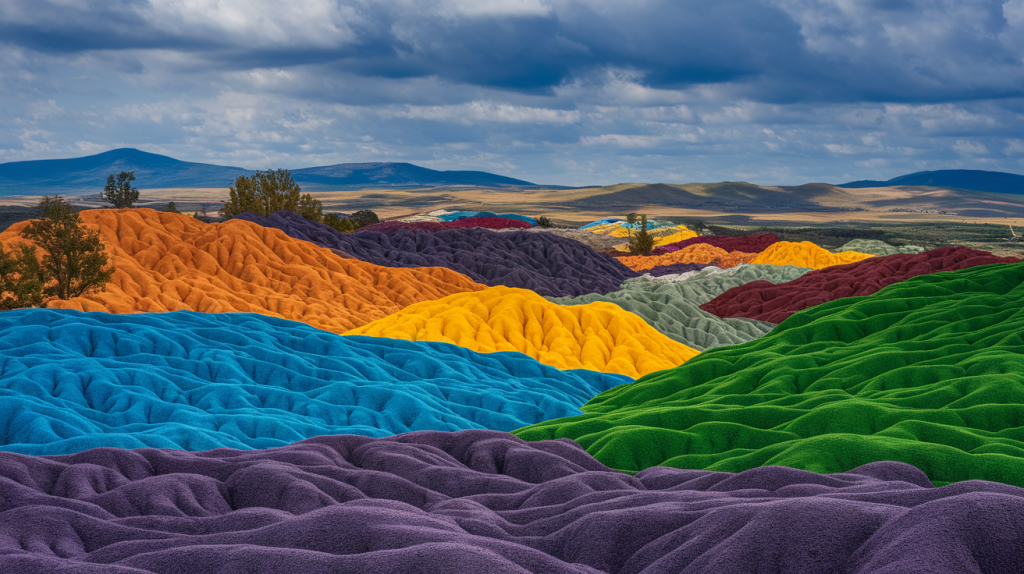
The nature-based approach to color naming in Yoruba isn’t accidental—it reflects a philosophical worldview that values direct observation and connection to the environment. This approach demonstrates several important cultural principles.
First, it shows empirical grounding. Rather than abstract concepts, Yoruba color terms are anchored in observable reality. This makes the language accessible and ensures shared understanding. When a Yoruba speaker says “àwọ̀ ewé,” everyone visualizes the same reference point—leaves—creating clear communication.
Second, it reveals environmental intimacy. The choice of leaves for green and oranges for orange shows deep familiarity with the natural world. These weren’t random choices but reflected the most common and recognizable instances of these colors in daily Yoruba life. This naming system preserves ecological knowledge within language itself.
Third, it demonstrates practical wisdom. By using familiar objects as color references, the Yoruba language creates a system that’s easy to learn and remember. Children growing up in Yoruba-speaking environments naturally absorb color concepts through interaction with the objects that name them.
This contrasts with color systems that use more abstract terms. While neither approach is superior, the Yoruba method reveals a culture that values tangible connection to the physical world, where language serves as a bridge between human perception and natural reality.
Colors in Traditional Yoruba Culture
Colors in Yoruba culture extend far beyond simple description—they’re integral to spiritual practices, social ceremonies, and artistic expression.
In Ceremonies and Rituals, color choices carry profound meaning. White (funfun) dominates many spiritual ceremonies, particularly those involving Ọbàtálá. Devotees wear white clothing, use white chalk for markings, and offer white foods. This isn’t decorative—white represents the purity and clarity necessary for spiritual communication.
Red (pupa) features prominently in celebrations and ceremonies honoring òrìṣà associated with power and vitality. During festivals for Ṣàngó, you’ll see abundant red in clothing, decorations, and offerings. The color signals energy, transformation, and divine power.
Black (dúdú) appears in ceremonies connecting with ancestral wisdom and in certain protective rituals. The color’s association with depth and mystery makes it appropriate for practices involving divination and spiritual insight.
In Clothing and Adire, traditional Yoruba textile arts showcase sophisticated color use. Adire, the traditional indigo-dyed cloth, demonstrates mastery of blue tones achieved through natural dye processes passed down through generations. The deep blues of adire cloth represent not just aesthetic choice but cultural heritage and artistic skill.
Traditional weaving incorporates specific color combinations that signal status, occasion, and meaning. Certain color patterns in aso oke (traditional woven cloth) are reserved for special occasions like weddings, naming ceremonies, or chieftaincy installations. The colors you wear communicate your role, status, and the nature of the event.
In Art and Expression, Yoruba artists have long used color symbolically. Traditional sculpture might use specific colors for spiritual significance. Contemporary Yoruba artists continue this tradition while expanding color palettes, creating dialogue between traditional color symbolism and modern artistic expression.
In oral literature—proverbs, poetry, and storytelling—colors appear as metaphors and symbols. A character described with “ojú funfun” (white eyes) might represent innocence or naivety, while “ọkàn dúdú” (black heart) suggests malicious intent. These color-based expressions enrich the language’s expressive capacity.
Symbolic Meanings You Should Know
Understanding color symbolism helps you navigate Yoruba cultural contexts appropriately. Here are key associations:
White (funfun) symbolizes purity, peace, spiritual cleanliness, and divine blessing. It’s appropriate for spiritual ceremonies, healing rituals, and occasions requiring clarity and honesty. Wearing white to certain ceremonies shows respect and spiritual preparation.
Red (pupa) represents life force, power, vitality, and transformation. It’s celebratory and energetic, appropriate for festivals and joyous occasions. However, context matters—red in certain spiritual contexts might signal warning or the presence of powerful forces requiring respect.
Black (dúdú) embodies wisdom, age, mystery, and ancestral connection. It’s not negative in traditional Yoruba thought, unlike some Western associations. Black represents depth, seriousness, and connection to profound spiritual knowledge.
Yellow (ìye/òféfèé) suggests brightness, warmth, and sometimes prosperity. Gold tones particularly connect to royalty and high status.
These associations aren’t rigid rules but cultural tendencies that inform appropriate color choices in different contexts. Modern Yoruba culture continues to honor these associations while also embracing contemporary color uses.
Cultural Insight: In Yoruba culture, colors don’t just describe—they communicate status, spirituality, and occasion. Choosing appropriate colors for ceremonies and events shows cultural knowledge and respect.
Mastering Pronunciation – The Tonal Challenge
Why Tones Matter in Yoruba Colors
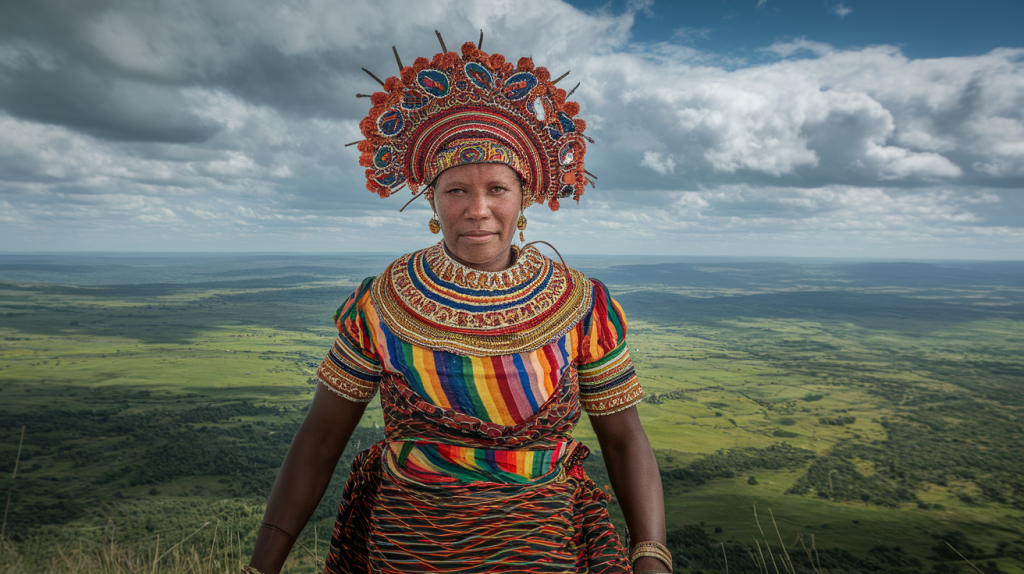
Yoruba is a tonal language, meaning that the pitch at which you pronounce a syllable changes the word’s meaning. This presents both a challenge and an opportunity for learners. The challenge is obvious—you must train your ear and voice to produce and recognize tonal differences. The opportunity is that mastering tones opens up authentic communication and cultural connection.
For color terms, tone can make the difference between being understood and creating confusion. The word “dúdú” (black) with high tones is completely different from “dudu” with different tones, which might mean something else entirely or simply sound wrong to native speakers.
Yoruba uses three basic tones: high (marked with an acute accent: á), mid (usually unmarked: a), and low (marked with a grave accent: à). These tones combine to create the melodic quality of spoken Yoruba. When you hear native speakers, you’re hearing a language that literally sings its meanings.
For “Àwọ̀,” you pronounce the first syllable with a mid tone and the second with a low tone, creating a slight downward pitch movement. This tonal pattern remains consistent, helping anchor the color terms that follow.
Pronunciation Guide for Each Color
Let’s break down the pronunciation of essential color terms with attention to tones:
Dúdú (Black): Both syllables carry high tones. Start with “doo” at a high pitch and maintain that high pitch for the second “DOO.” The sound is crisp and clear, with emphasis on maintaining the high tone throughout.
Funfun (White): Both syllables use mid tones. The pronunciation is “foon-FOON” at a comfortable middle pitch. The double “n” sound is important—don’t rush through it. Let each syllable have its full sound.
Pupa (Red): The first syllable “pu” has a high tone, while the second “pa” has a mid tone, creating a high-to-mid pattern: “POO-pah.” This subtle pitch change is important for native-sounding pronunciation.
Àwọ̀ Ewé (Green): “Àwọ̀” has a mid-low pattern (ah-WOH), while “ewé” has a mid-high pattern (eh-WEH). The complete phrase creates a tonal melody: mid-low, mid-high.
Àwọ̀ Ọsàn (Orange): After the mid-low “Àwọ̀,” “Ọsàn” has a mid-mid pattern. The “Ọ” has a special quality—it’s pronounced with rounded lips, similar to the “o” in “ought.”
Àwọ̀ Ìye (Yellow): “Ìye” has a low-mid pattern (EE-yeh). The initial “Ì” starts at a low pitch before rising slightly to mid for “ye.”
Common Pronunciation Pitfalls
Learners often struggle with several aspects of Yoruba color pronunciation:
Tone consistency is the biggest challenge. Learners might start with the correct tone but drift as they complete the word. Practice maintaining tone throughout the entire word. Record yourself and compare to native speakers.
The “funfun” double sound trips up many learners. Don’t pronounce it as “fun-fun” with a clear break. Instead, let it flow as “fuun-fuun” with the “n” sound bridging both syllables naturally.
Nasalization appears in Yoruba but isn’t always marked in writing. Some sounds have a nasal quality that affects pronunciation. Listening to native speakers helps you develop an ear for when nasalization occurs.
The special Yoruba vowels ẹ and ọ require practice. These aren’t exactly like English “e” and “o.” The ẹ is more open (like “eh” in “bet”), while ọ is rounded (like “aw” in “ought”). These subtle differences affect how colors sound.
Practice tips: Start by mastering one color at a time. Use the tone marks as a guide, but ultimately train your ear through listening. Many learners find it helpful to think of tones musically—high, mid, and low notes. Practice with native speaker recordings, repeat frequently, and don’t be discouraged by initial difficulty. Tone acquisition takes time but becomes natural with consistent practice.
Practical Usage – Speaking Colors Like a Native
Essential Phrases and Sentence Structures
Knowing color vocabulary is one thing; using it naturally in conversation is another. Here are essential constructions that will help you discuss colors in real situations:
“Kí ni àwọ̀ yìí?” (What color is this?) – This is your go-to question when asking about color. Pronounced “KEE nee ah-WOH YEE-ee,” this phrase works in any context from shopping to discussing objects.
“Àwọ̀ rẹ̀ dúdú” (Its color is black) – This structure “Àwọ̀ rẹ̀ [color]” allows you to state what color something is. Replace “dúdú” with any color term. You can also say “Ó jẹ́ dúdú” (It is black) for a simpler construction.
Describing objects by color: Place the color after the noun: “Aṣọ pupa” (red cloth), “Ọkọ̀ funfun” (white car), “Ilé dúdú” (black house). This noun-color pattern is standard in Yoruba.
Asking about preferences: “Àwọ̀ wo ni o fẹ́ràn?” (What color do you like?) – Pronounced “ah-WOH woh nee oh FEH-rahn,” this helps you discuss color preferences.
Expressing preferences: “Mo fẹ́ràn àwọ̀ pupa” (I like red color) or simply “Mo fẹ́ pupa” (I like red). The verb “fẹ́ràn” means “to like/love.”
Real-World Conversation Examples
Let’s see how these phrases work in practical scenarios:
Shopping for clothing:
– Customer: “Ẹ ní aṣọ àwọ̀ ewé bí?” (Do you have green cloth?)
– Seller: “Bẹ́ẹ̀ni, a ní àwọ̀ ewé púpọ̀” (Yes, we have plenty of green)
– Customer: “Mo fẹ́ èyí tó ní àwọ̀ ewé àti funfun” (I want this one that has green and white)
Describing someone’s clothing:
– “Ó wọ aṣọ pupa tó dára” (She’s wearing beautiful red clothing)
– “Bàtà rẹ̀ dúdú” (His shoes are black)
– “Gèlè funfun náà dára púpọ̀” (That white head-tie is very beautiful)
Talking about nature:
– “Ewé náà ní àwọ̀ ewé tuntun” (The leaves have fresh green color)
– “Òòrùn ní àwọ̀ ìye lónìí” (The sun has yellow color today)
– “Ọ̀run dúdú, òjò máa rọ̀” (The sky is dark, rain will fall)
Expressing preferences in conversation:
– “Àwọ̀ wo ni o fẹ́ràn jù?” (Which color do you like most?)
– “Mo fẹ́ràn búlúù àti funfun” (I like blue and white)
– “Pupa kò wù mí” (Red doesn’t please me/I don’t like red)
Compound Descriptions and Nuance
As you advance, you’ll want to describe shades and combinations:
Light and dark variations: Add “funfun díẹ̀” (a little white) for lighter shades: “Àwọ̀ pupa funfun díẹ̀” (light red/pink). For darker shades, use “dúdú díẹ̀” (a little black): “Àwọ̀ ewé dúdú díẹ̀” (dark green).
Mixed colors: Use “àti” (and) or “pẹ̀lú” (with): “Àwọ̀ pupa àti ìye” (red and yellow), “Búlúù pẹ̀lú funfun” (blue with white).
Intensity descriptions: “Àwọ̀ pupa tó ga” (strong/intense red), “Àwọ̀ tó fẹ́ẹ́rẹ́ jẹ́ funfun” (color that almost is white/very light).
Comparative descriptions: “Pupa ju èyí lọ” (more red than this one), “Kò pupa tó” (not as red).
These compound descriptions allow for precise color communication, essential in contexts like shopping, art, design, or any situation requiring specific color identification.
Learning Resources and Modern Tools
Digital Platforms for Yoruba Color Learning
Technology has revolutionized Yoruba language learning, making quality resources accessible worldwide. Here are the most effective digital tools:
Memrise stands out with highly-rated Yoruba courses (4.8 and 4.6 stars) that include comprehensive color vocabulary. The platform uses spaced repetition, helping you retain color terms through scientifically-proven memory techniques. Memrise courses often include audio from native speakers, crucial for mastering tonal pronunciation. The app works on both iOS and Android, allowing you to practice colors during commute time or spare moments throughout the day.
The platform’s strength lies in its structured approach. You’ll encounter colors in progressive lessons, starting with basic terms and advancing to compound descriptions. The gamified learning keeps engagement high, while the community features let you connect with other learners and native speakers.
Languagedrops takes a different approach with its visual, word-by-word method. Each color appears with beautiful illustrations, helping create strong mental associations. The app focuses on vocabulary building through quick, five-minute sessions—perfect for busy learners. Drops emphasizes pronunciation, with clear audio for each color term.
The visual approach particularly suits color learning. Seeing “dúdú” paired with images of black objects reinforces the connection between word and concept. The app’s minimalist design keeps focus on learning without distractions.
YouTube channels offer free, comprehensive color lessons. Channels dedicated to Yoruba language instruction provide pronunciation demonstrations, cultural context, and practical usage examples. The advantage of video is seeing mouth position and tongue placement for proper pronunciation, especially important for tonal languages.
Look for channels that feature native speakers, provide cultural context alongside vocabulary, and offer beginner-friendly content. Many channels organize lessons by topic, making it easy to find color-specific instruction.
Interactive websites provide additional practice opportunities. Some offer flashcards, quizzes, and games focused on Yoruba vocabulary including colors. Web-based platforms often include community forums where you can ask questions, share learning experiences, and get feedback from native speakers.
Traditional Learning Methods
While digital tools are valuable, traditional methods remain highly effective, especially for developing conversational fluency:
Working with native speakers provides irreplaceable benefits. Native speakers offer authentic pronunciation, cultural context, and immediate feedback. They can explain subtle differences between color terms, when to use formal versus casual forms, and how colors function in idiomatic expressions.
Finding native speakers has become easier through language exchange platforms, community cultural centers, and Yoruba cultural organizations. Many native speakers enthusiastically support language learners, seeing it as cultural preservation.
Cultural immersion opportunities, while not available to everyone, offer intense learning experiences. If possible, spending time in Yoruba-speaking communities accelerates learning dramatically. You’ll hear colors used naturally in context, absorb pronunciation through constant exposure, and develop cultural understanding that textbooks can’t provide.
Even short immersion experiences—attending Yoruba cultural events, visiting Yoruba restaurants, participating in cultural celebrations—expose you to authentic language use.
Language exchange partnerships create mutual benefit. You help someone learn your language while they help you with Yoruba. Regular exchange sessions provide consistent practice, accountability, and cultural exchange. Many successful learners credit language partners with their progress.
Community classes, offered by cultural centers, universities, or community organizations, provide structured learning with cultural context. Classes often include native speaker instructors, group practice opportunities, and comprehensive curriculum covering colors alongside other vocabulary.
Creating Your Learning Plan
Successful color vocabulary acquisition requires a structured approach:
Start with core colors: Master dúdú, funfun, and pupa before expanding. These three appear most frequently and form the foundation for understanding more complex color terms.
Progressive complexity: After mastering basic colors, add àwọ̀ ewé, àwọ̀ ìye, and other common colors. Then progress to compound descriptions and nuanced shade variations.
Integration with other vocabulary: Practice colors while learning object names. Learn “aṣọ” (cloth) and immediately practice “aṣọ dúdú,” “aṣọ funfun,” etc. This contextual learning improves retention.
Practice schedules: Consistency beats intensity. Daily 15-minute practice sessions outperform occasional marathon sessions. Use flashcards during breakfast, practice pronunciation during commute, review before bed.
Tracking progress: Keep a learning journal noting new color terms, usage examples, and cultural insights. Review regularly to reinforce learning and identify areas needing more practice.
Set specific goals: “This week I’ll master the three primary colors,” “This month I’ll learn all nature-based color terms,” “By next month I’ll use colors in five-sentence conversations.” Specific goals provide direction and motivation.
Beyond Basics – Advanced Color Concepts
Regional Variations in Color Terms
Yoruba isn’t monolithic—it encompasses various dialects across Nigeria, Benin, and Togo, each with subtle color terminology variations. Understanding these variations helps you communicate effectively across different Yoruba-speaking communities.
Dialectal differences might involve pronunciation variations, alternative terms for the same color, or different preferences for using “Àwọ̀” prefix. For example, some regions might consistently use “Àwọ̀ pupa” while others prefer simply “pupa.” Neither is wrong—they reflect regional linguistic preferences.
Urban versus rural usage sometimes differs. Urban areas, with more exposure to English and modern technology, might incorporate more borrowed color terms for specific modern shades. Rural areas often maintain more traditional color vocabulary and nature-based descriptions.
Generational changes affect color vocabulary. Younger speakers might use borrowed terms more freely, while older speakers prefer traditional terms. Both approaches coexist, creating rich linguistic diversity.
Standardization efforts by language organizations aim to preserve Yoruba while allowing natural evolution. These efforts document traditional color terms, provide standardized spellings, and create resources for learners and speakers.
Colors in Yoruba Idioms and Proverbs
Yoruba’s rich oral tradition includes numerous idioms and proverbs featuring colors, each carrying cultural wisdom:
“Ojú funfun” (white eyes) describes innocence, naivety, or someone easily deceived. The expression shows how color terms extend beyond literal meaning into character description.
“Ọkàn dúdú” (black heart) suggests malicious intent or wickedness, though remember that black itself isn’t negative—the idiom refers to hidden darkness within.
“Ẹ̀jẹ̀ pupa” (red blood) appears in expressions emphasizing life, vitality, or shared humanity: “A jọ ní ẹ̀jẹ̀ pupa kan” (We share the same red blood).
These idiomatic uses demonstrate how deeply colors integrate into Yoruba thought and expression. Learning these expressions provides cultural insight while expanding your communicative range.
Modern Additions to Yoruba Color Vocabulary
Like all living languages, Yoruba continues evolving, particularly in color vocabulary as speakers encounter new shades and contexts:
Technology colors—the specific shades of electronics, cars, and modern products—sometimes use borrowed terms adapted to Yoruba phonology. “Búlúù” (blue) represents this adaptation, taking the English word and fitting it to Yoruba sound patterns.
Contemporary Yoruba evolution shows creative approaches to new colors. Some speakers create compound descriptions using traditional terms, while others adopt and adapt foreign terms. Both strategies enrich the language.
Youth language trends introduce innovative color uses and combinations. Young speakers might blend English and Yoruba color terms, create new metaphorical uses, or develop slang involving colors.
This evolution isn’t language corruption—it’s natural linguistic development. Languages that don’t evolve become extinct. Yoruba’s ability to adapt while maintaining core vocabulary ensures its continued vitality.
Teaching Yoruba Colors – For Educators and Parents
Age-Appropriate Teaching Strategies
Teaching colors effectively requires adapting methods to learners’ ages and developmental stages:
For young children (ages 3-7), use highly visual, interactive methods. Color-matching games, singing color songs, and physical activities (touching objects of specific colors) work well. Children learn through play, so make color learning fun and multisensory.
Create color hunts: “Find something dúdú!” Sing color songs to familiar tunes. Use colorful Yoruba children’s books. The goal is natural absorption through joyful engagement, not formal memorization.
For older children and teens (ages 8-17), introduce more systematic approaches while maintaining engagement. Use flashcards, color-based storytelling, art projects with Yoruba color labels, and games like color bingo or memory matching.
Connect colors to their interests—sports team colors, favorite clothing, popular culture. Make it relevant to their world while building vocabulary.
For adult learners, systematic study combined with practical application works best. Provide pronunciation guides, cultural context, and real-world usage examples. Adults benefit from understanding the “why” behind color terms—the cultural logic and linguistic patterns.
Use authentic materials: Yoruba videos, music, literature. Adults can handle complexity, so don’t oversimplify. Explain tonal patterns, discuss regional variations, explore idiomatic uses.
Cultural Integration in Lessons
Color teaching provides perfect opportunities for cultural education:
Connect colors to traditional stories: Many Yoruba folktales feature colors symbolically. Teaching “funfun” while sharing stories about Ọbàtálá creates memorable cultural connections.
Explore traditional textiles: Show adire cloth while teaching blue terms. Display aso oke while discussing color combinations in traditional weaving. Visual cultural artifacts make abstract vocabulary concrete.
Discuss ceremonial color use: Explain why certain colors appear in specific ceremonies. This context transforms vocabulary learning into cultural education.
Hands-on cultural activities: Try natural dyeing using traditional methods. Create simple adire patterns. These activities cement color vocabulary through experiential learning while honoring cultural traditions.
Assessment and Progress Tracking
Effective assessment ensures learning while building confidence:
Simple evaluation methods for beginners might include color identification (showing objects and asking “Kí ni àwọ̀ yìí?”), matching games, or fill-in-the-blank exercises.
Pronunciation checks are crucial for tonal languages. Record learners saying color terms, compare to native speaker models, and provide specific feedback on tonal accuracy.
Cultural knowledge verification ensures learners understand not just words but meanings. Ask questions like “Why is white important in Yoruba ceremonies?” or “What does the idiom ‘ojú funfun’ mean?”
Encouraging continued learning: Celebrate progress, no matter how small. Provide positive feedback. Connect learners with resources for independent study. Help them set achievable goals.
Create progress charts showing colors mastered. Award certificates for completing color vocabulary levels. Make assessment encouraging, not intimidating.
Conclusion
We’ve journeyed through the rich landscape of Yoruba color vocabulary, from understanding “Àwọ̀” as the foundational frame for color concepts to mastering the pronunciation of essential terms like dúdú, funfun, and pupa. We’ve explored how nature-based naming reveals Yoruba cultural wisdom, discovered the deep symbolic meanings colors carry in ceremonies and daily life, and equipped ourselves with practical phrases for real-world conversations.
The Yoruba approach to color—grounding terms in observable natural objects like leaves and fruits—demonstrates a culture deeply connected to its environment. This isn’t just linguistic curiosity; it’s a worldview that values direct observation, shared reference points, and the integration of language with lived experience.
Learning Yoruba colors opens doors far beyond simple vocabulary acquisition. Each color term you master connects you to centuries of cultural knowledge, artistic tradition, and philosophical thought. When you describe something as “àwọ̀ ewé,” you’re not just saying “green”—you’re participating in a linguistic tradition that has linked color perception to natural observation for generations.
For members of the Nigerian diaspora, learning these color terms reconnects you with ancestral heritage. For language enthusiasts, it provides insight into how different cultures categorize and describe the visual world. For educators, it offers rich material for culturally-responsive teaching. For everyone, it represents the beautiful diversity of human language and thought.
The journey doesn’t end here. Every color term you learn strengthens your connection to Yoruba language and culture. Every conversation where you successfully use these terms builds bridges of understanding. Every time you recognize the cultural wisdom embedded in “àwọ̀ ewé” or appreciate the spiritual significance of “funfun,” you’re participating in language preservation and cultural celebration.
Remember that language learning is a marathon, not a sprint. Be patient with yourself as you master tones, practice pronunciation, and absorb cultural context. Celebrate small victories—correctly pronouncing “dúdú,” successfully asking about color in a conversation, recognizing color terms in Yoruba music or literature. These moments accumulate into fluency.
The Yoruba language thrives because learners like you invest time and energy in mastering it. In our digital age, where minority languages face unprecedented challenges, every person who learns Yoruba contributes to its preservation and continued vitality. Your learning journey matters.
As you begin to see the world through Yoruba colors—from the dúdú of night to the funfun of dawn, from the pupa of celebration to the àwọ̀ ewé of growing things—you’re not just learning words. You’re inheriting centuries of observation, wisdom, and connection to the natural world. You’re joining a global community of Yoruba speakers and learners. You’re participating in the beautiful, ongoing story of human language and culture.
Ẹ kú ìkẹ́kọ̀ọ́! (Well done in your learning!) May your journey into Yoruba language continue to bring you joy, connection, and cultural enrichment. The colors of Yoruba await your voice—speak them with confidence, use them with cultural sensitivity, and share them with others who wish to learn.
Take Your Yoruba Learning Further
Download Your Free Yoruba Color Flashcard Set: Get beautifully designed printable and digital flashcards featuring all the colors covered in this guide, complete with pronunciation guides, tonal marks, and cultural notes. Perfect for daily practice and quick reference. [Sign up now](#) to receive your free flashcard set and join our weekly Yoruba language learning newsletter.
Join Our Yoruba Language Learning Community: Connect with fellow learners and native speakers in our vibrant online community. Share your progress, ask questions, practice pronunciation, and access exclusive learning resources. Whether you’re just starting or advancing your skills, you’ll find support and encouragement. [Join the community here](#).
Explore More Yoruba Language Lessons: Ready to expand beyond colors? Discover our comprehensive guides to Yoruba numbers, essential greetings, family terms, and conversational phrases. Build a complete foundation in Yoruba language with our structured learning path. [Browse all lessons](#).
Which Yoruba color name surprised you most? Share in the comments below! Are you learning Yoruba? What’s been your biggest challenge so far? Native speakers, what color terms or cultural insights did we miss? Help us create the most comprehensive Yoruba color guide by sharing your knowledge and experience. Your contribution helps preserve and celebrate this beautiful language.


