
Imagine memorizing your family tree back fifteen generations. Now add every major event in your community’s history for the past 500 years. Include the laws, the land disputes, the births, deaths, and marriages.
Oh, and you need to perform all of this information through song and narrative—without notes—while playing a 21-string instrument.
Impossible? For West African griots, this was Tuesday.
If you’ve ever struggled to remember information for an exam or felt overwhelmed trying to retain what you’ve learned, the griot tradition offers proven techniques that predate modern education by centuries. These master knowledge-keepers developed effective memory systems that can transform how you approach learning today. But here’s what most people miss: griots weren’t just storytellers. They were historians, political advisors, musicians, genealogists, teachers, and sometimes even healers—all rolled into one prestigious position.
Understanding how griots managed these multiple roles reveals essential strategies for anyone struggling with retention, motivation, or finding the best learning methods. Let’s explore the comprehensive skill set of these remarkable individuals and discover what modern learners can master from their time-tested approaches.
Who Are Griots? Understanding This Hereditary Tradition
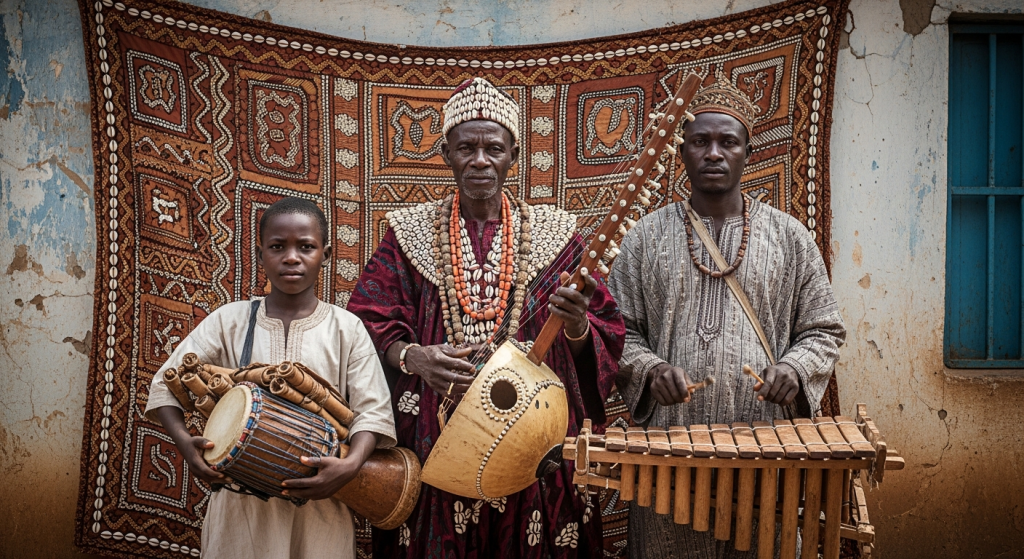
The Origins and Cultural Significance of Griots (Jeliw)
Griots—known as “jeliw” in many Mande societies—represent one of history’s most successful knowledge transmission systems. Born into their position through hereditary succession, griots maintained an unbroken chain of cultural preservation across West Africa’s western Sahel region for centuries.
The term “jeli” itself means “blood” in the Manika language. This isn’t coincidental. Griots were considered the lifeblood of their communities, carrying vital information through their veins the way blood carries oxygen through the body. Without them, the community would lose its connection to identity, law, and history.
This hereditary system wasn’t arbitrary—it was brilliantly practical. By passing the role from parent to child, communities ensured that training began in childhood and continued for decades. Young griots absorbed information gradually, building layer upon layer of knowledge through what modern educators call “spaced repetition” and “active learning.” A child born into a griot family didn’t just learn facts; they lived and breathed the tradition daily, observing master practitioners before attempting the craft themselves.
Predominantly found among Mande societies in present-day Mali, Senegal, Guinea, and surrounding regions, griots operated in a world without written records, libraries, or Google. Yet they preserved detailed genealogies, complex legal precedents, and epic narratives spanning thousands of lines—all through carefully structured oral tradition.
More Than a Job—A Sacred Responsibility
Here’s what most articles get wrong: being a griot wasn’t like choosing a career path. It was a sacred responsibility that defined your entire existence. Griots served as custodians of operational knowledge under conditions where permanence couldn’t be guaranteed. No books meant no backup. If a griot failed to pass on information accurately, that knowledge vanished forever.
This prestigious community position combined multiple specialized roles that would typically require separate experts in modern society. A single griot might advise a king in the morning, mediate a land dispute at noon, perform at a wedding in the evening, and teach apprentices at night. The role demanded encyclopedic knowledge, diplomatic skills, artistic talent, and teaching ability—simultaneously.
The unbroken chain connecting past and present through oral tradition created accountability that modern students rarely experience. When you’re the only link between your ancestors and your descendants, you don’t procrastinate on your studies. You don’t half-learn material. You master it completely because entire communities depend on your retention.
Why does this matter for your learning journey? Because it demonstrates a fundamental truth: when you approach knowledge as something precious that you’ll transmit to others—not just memorize for a test—your brain engages differently. You retain better. You understand deeper. You connect more thoroughly.
Role #1: Historians and Keepers of Collective Memory
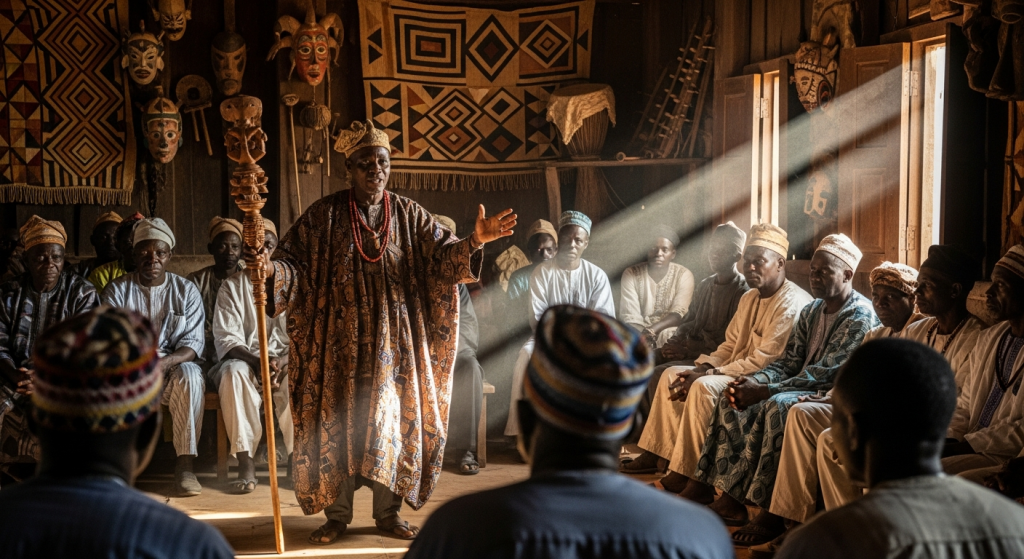
Living History Books—How Griots Preserve the Past
Griots functioned as living archives, maintaining genealogies that determined who had authority to rule, inherit land, claim resources, and speak in council meetings. This wasn’t casual family tree tracking—it was the legal framework of society. Get it wrong, and you could spark wars over succession or invalidate legitimate claims to leadership.
The most famous example is the Sunjata epic, a legendary narrative about the founder of the Mali Empire. This epic contains thousands of lines that griots memorized and performed, preserving not just entertainment but historical events, cultural values, and political lessons. Modern scholars study griot performances to understand West African history because these oral archives rival written records in accuracy and detail.
How did they create such an effective system? Griots used narrative structure as their filing system. Instead of memorizing isolated facts, they embedded information within stories. When you need to remember that King A ruled for 23 years before King B took power, you don’t just repeat “23 years” until it sticks. You tell the story of King A’s three major wars, his five children, and the drought that marked his final years—suddenly, 23 years makes perfect sense.
This narrative approach directly connects to modern memory palace techniques and story-based learning. Research in cognitive psychology confirms what griots knew centuries ago: your brain remembers stories far better than lists. When you transform information into narrative form, you activate multiple brain regions—visual processing, emotional centers, and sequential reasoning—creating stronger, more durable memories.
The Art of Weaving Fact with Legend
Griots mastered something that makes modern historians uncomfortable: they blended historical accuracy with engaging storytelling elements. Was every detail of the Sunjata epic literally true? Probably not. Did it preserve essential historical events, cultural values, and political structures? Absolutely.
This approach makes information stick. Pure facts bore us. They feel disconnected from meaning and purpose. But wrap those facts in drama, conflict, and resolution, and suddenly we’re engaged. We remember.
Think about your own learning experiences. You probably forgot most of the dates you memorized for history class. But you remember the dramatic stories—the Trojan Horse, the midnight ride of Paul Revere, the discovery of penicillin. Story creates context, and context creates retention.
Here’s your practical application: when you’re studying complex subject matter, create a story framework around it. Studying chemistry? Don’t just memorize that electrons orbit the nucleus. Tell yourself the story of electrons as energetic dancers circling a crowded nightclub, each staying in their designated zone, occasionally jumping to different energy levels when the music (energy) changes. Ridiculous? Maybe. Memorable? Definitely.
This evidence-based connection to memory palace techniques works because your brain evolved to remember narratives. For 200,000 years, humans survived by remembering stories about which berries were poisonous, where the water source was, and what happened to the person who ignored the warning signs of a predator. We’re hardwired for narrative learning—griots just perfected the technique.
Role #2: Advisors and Political Counselors
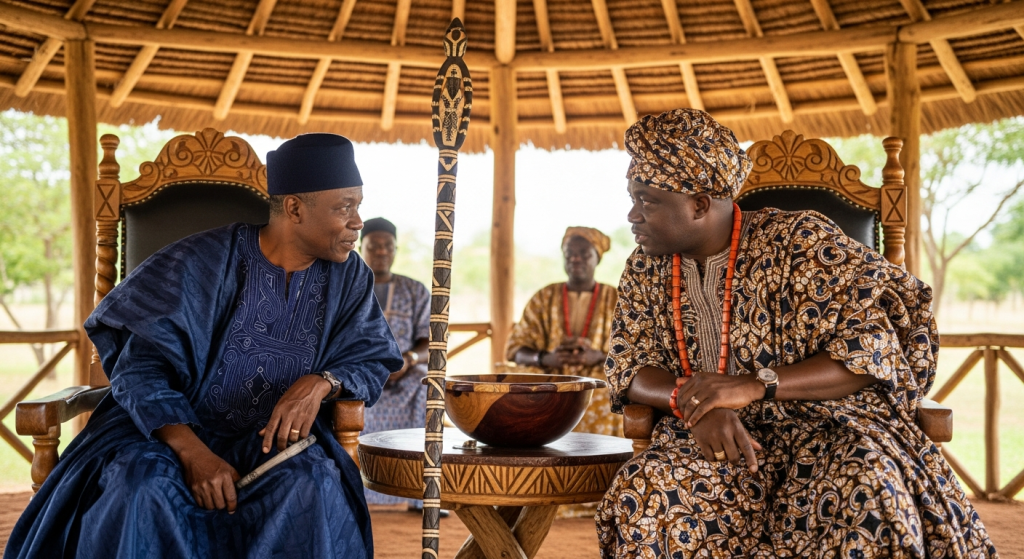
Trusted Voices in Leadership Decisions
Griots served as indispensable advisors to rulers and community leaders, providing historical context for contemporary decisions. When a king faced a territorial dispute, the griot recalled how similar conflicts were resolved three generations earlier. When drought threatened food supplies, the griot shared strategies that worked during past famines.
This comprehensive knowledge made griots uniquely valuable. They weren’t just telling leaders what they wanted to hear—they provided institutional memory that prevented communities from repeating past mistakes. A leader might have power, but the griot had perspective.
The griot’s role in preserving and transmitting law and governance structures meant they literally held the keys to legitimate authority. They knew which families had hereditary rights to specific positions, what precedents governed land use, and how traditional law applied to new situations. This wasn’t decorative knowledge—it was the operating system of society.
Arbitrators and Conflict Resolvers
Beyond advising leaders, griots acted as mediators in community disputes. When two families argued over land boundaries, the griot didn’t just pick a side—they recounted the history of that land, who had used it, what agreements had been made, and how similar disputes had been resolved.
Using historical precedent and wisdom to resolve conflicts gave griots tremendous authority. They could invoke tradition, appeal to shared values, and remind disputants of their common heritage. This power of storytelling in negotiation and persuasion remains relevant today—the best negotiators don’t just argue positions, they frame narratives that help all parties see solutions.
Here’s your learning application: understanding multiple perspectives improves critical thinking skills. When you study any topic, don’t just learn the “correct” answer. Learn why people disagree, what historical context shapes different viewpoints, and how various interpretations emerged. This comprehensive approach—the griot approach—deepens understanding and improves retention because you’re building a rich network of connections rather than memorizing isolated facts.
Role #3: Musicians and Performance Artists
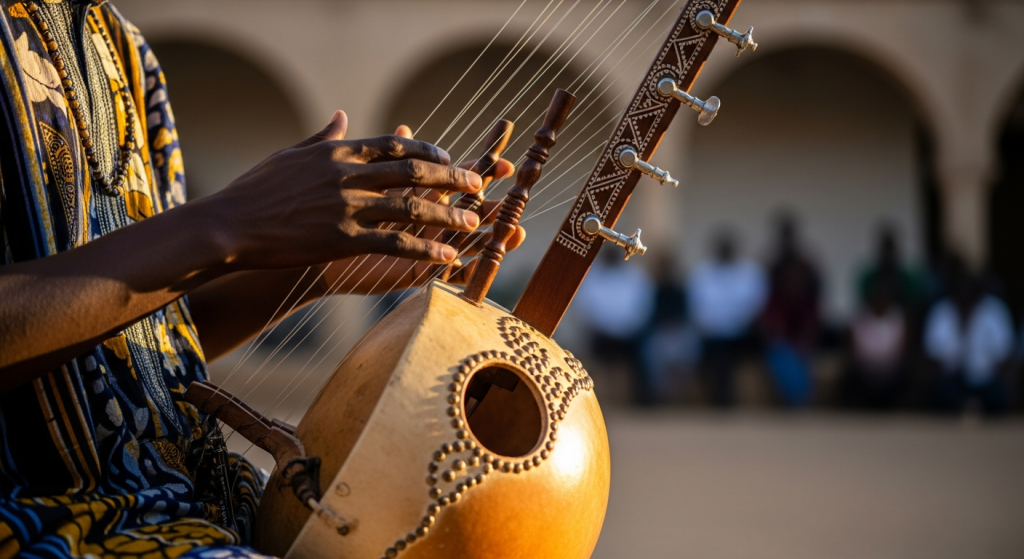
The Kora and Other Musical Instruments
The 21-string kora serves as the signature instrument of many griots—a long-necked harp lute that produces cascading melodies while the griot sings historical narratives. This wasn’t background music. The music was the delivery system.
Playing an instrument while performing complex narratives demonstrates extraordinary cognitive ability. Your hands are executing intricate patterns on 21 strings while your mouth forms words and your brain retrieves the next section of a story you’ve memorized. It’s like juggling while doing calculus—except the griot makes it look effortless.
Why combine music with history? Because music enhances memory and emotional connection to stories. Rhythm provides structure. Melody creates emotional resonance. Together, they transform information from something you study into something you feel.
The performance aspect—entertaining while educating—kept audiences engaged for hours. A griot didn’t just recite facts. They performed them with dramatic flair, musical accompaniment, and audience interaction. This multi-sensory approach activated more neural pathways, creating stronger memories.
Your smart study strategy: use rhythm and music to boost information retention. Create songs or rhymes for information you need to remember. Set formulas to familiar tunes. Tap out rhythms while reciting lists. This isn’t childish—it’s neurologically sound. Your brain’s musical processing centers are powerful memory tools.
Praise Songs and Social Commentary
Griots created praise songs to honor individuals and families, celebrating achievements and reinforcing positive behaviors. But these weren’t just flattery—they were social engineering. By publicly praising generosity, courage, or wisdom, griots reinforced the values their communities needed to thrive.
This dual purpose of entertainment and education in oral traditions meant that every performance carried weight. People remembered what griots sang about them. Reputation mattered. The griot’s words could elevate or diminish social standing.
Modern parallel: engaging presentation improves learning outcomes. Studies consistently show that students retain more from dynamic, engaging teachers than from monotone lecturers presenting identical information. The griot tradition proves this principle—when learning is entertaining, it sticks.
Role #4: Genealogists and Family Historians
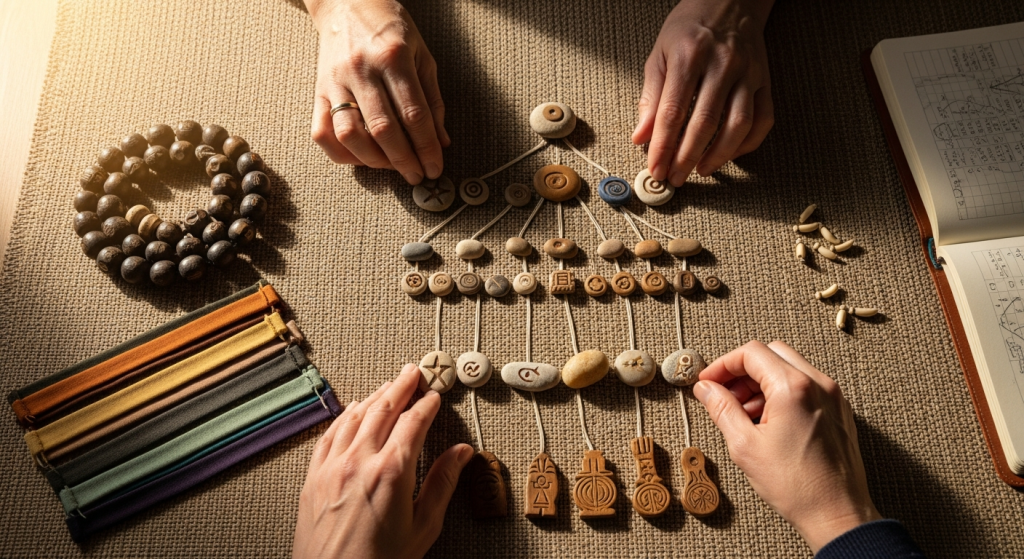
Tracking Lineages Across Generations
Griots maintained detailed family trees and ancestral connections stretching back centuries. This wasn’t hobby genealogy—it was the legal documentation system. Genealogy determined who could inherit property, claim leadership positions, and participate in important councils.
The mental organization required to retain these complex relationship networks was staggering. A griot needed to remember not just direct lineages but marriages, adoptions, disputes, and the social standing of hundreds of families across multiple generations.
Think about that for a moment. Without writing anything down, griots tracked information that would fill multiple filing cabinets in a modern records office. They did it through systematic organization, regular review, and narrative frameworks that connected individual facts into coherent wholes.
Here’s your study technique: create concept maps and relationship diagrams to ace exams. When you’re studying complex systems—whether it’s biological processes, historical events, or mathematical relationships—draw out the connections. Visual organization mirrors how griots mentally structured information, creating multiple retrieval pathways in your brain.
Preserving Identity Through Ancestral Knowledge
Knowing your lineage strengthened community bonds in ways modern societies have largely lost. When the griot recited your family history at ceremonies, celebrations, and rites of passage, you heard your connection to something larger than yourself. You learned your place in an ongoing story.
The griot’s role in these ceremonial moments created cultural continuity through intentional knowledge transmission. Each generation received their identity package—who they were, where they came from, what values they inherited, and what responsibilities they carried forward.
Application for learners: build knowledge frameworks that connect new information to existing understanding. Don’t treat each new topic as completely separate from everything you already know. Ask yourself: “How does this connect to what I learned yesterday? How does it relate to my personal experience? Where does it fit in the bigger picture?” This approach—connecting new to known—is exactly how griots built their massive knowledge bases without ever writing anything down.
Role #5: Teachers and Cultural Transmitters
Educating the Next Generation
Griots used both formal and informal teaching methods, but their apprenticeship model was remarkably effective. Young griots learned through observation, practice, and mentorship—watching master griots perform, attempting sections themselves, receiving correction, and gradually taking on more responsibility.
This combining of observation, practice, and mentorship creates effective learning because it addresses how humans actually acquire complex skills. You can’t become a griot by reading a manual. You become one by doing the work under expert guidance, making mistakes in safe environments, and building competence gradually over years.
Modern research on expertise development confirms what griot traditions demonstrated: spaced repetition and active practice work. You don’t master material by cramming the night before an exam. You master it through distributed practice over time, actively engaging with the material rather than passively reviewing it.
A young griot might spend five years just learning the foundational stories before attempting the advanced epics. They’d practice sections repeatedly, perform for small audiences, and receive detailed feedback. This patient, systematic approach to skill development produces true mastery—not just surface-level familiarity.
Curating Sacred Spaces for Learning and Growth
Modern-day griots—those carrying on the tradition in contemporary contexts—create safe, brave spaces for storytelling and learning. They understand that effective teaching requires more than just information transfer. It requires environments where students feel comfortable asking questions, making mistakes, and exploring deeper meanings.
The pedagogical approach griots used encouraged questions and deeper exploration rather than passive reception. A griot might pause mid-story to ask the audience what they think happens next, or to explain why a character made a particular choice. This interactive element kept learners engaged and thinking critically.
Teaching values, behavior, and cultural traditions through narrative meant that lessons stuck because they came wrapped in meaning. You don’t just tell children “be brave”—you tell them about the hero who faced impossible odds, the choices that hero made, and the consequences that followed. The lesson lands deeper because it’s experienced through story rather than delivered as a command.
How educators can enhance their teaching by incorporating storytelling techniques: frame lessons as narratives with conflict and resolution, use concrete examples that students can visualize, and create emotional connections to material. When your students feel something about what they’re learning, they remember it.
Role #6: Holistic Healers and Community Wellness Guides
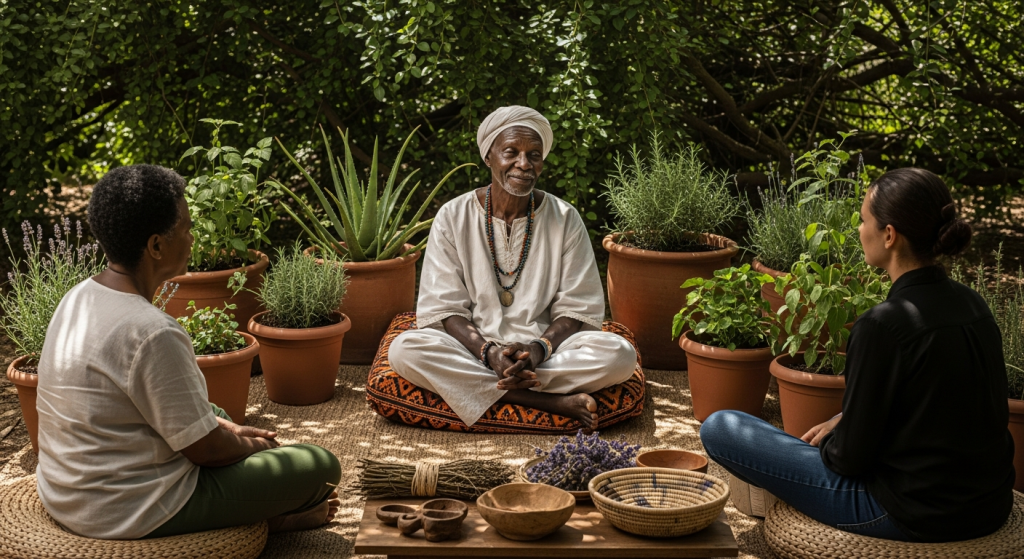
The Uncommon Role of Marabout-Griots
Some griots took on the uncommon role of marabouts, combining their storytelling with herbal healing practices. This dual expertise merged narrative wisdom with practical medicine, positioning them as holistic healers addressing both physical and cultural ailments.
A marabout-griot might treat a physical illness with herbs while also addressing the patient’s spiritual or emotional state through story and counsel. This integrated approach recognized what modern medicine is slowly relearning—that health involves more than just physical symptoms.
The multifaceted nature of griot professions beyond performance demonstrates the comprehensive value these individuals provided to their communities. They weren’t narrow specialists; they were polymaths who understood that human problems rarely fit into single categories.
Emotional and Spiritual Healing Through Story
Modern griots serve as grief counselors and spiritual entrepreneurs, using stories to help people recognize gifts within themselves. They create spaces for healing, flourishing, and thriving—not through prescriptions or therapy protocols, but through the ancient practice of narrative wisdom.
When you’re struggling with loss, confusion, or identity questions, a griot might share a story about an ancestor who faced similar challenges. That story doesn’t solve your problem directly, but it provides perspective, context, and connection. You realize you’re not the first person to face this struggle, and you see how others navigated similar waters.
This approach to emotional healing through story has practical applications for modern learners, particularly those dealing with test anxiety and exam stress. When anxiety strikes, your brain is telling you a story—”I’m going to fail,” “I’m not smart enough,” “Everyone will judge me.” Counter-narratives can help. Remind yourself of times you succeeded despite doubts. Tell yourself the story of how you’ve overcome challenges before. Use narrative to reframe anxiety from a threat into a challenge you can meet.
Stress management and test anxiety respond well to narrative processing because stories help us make sense of overwhelming emotions. Instead of feeling flooded by anxiety, you can step back and recognize it as one chapter in a larger story—a story where you’re the protagonist who has overcome obstacles before and will do so again.
What Modern Learners Can Master from Griot Traditions

Proven Memory Techniques from Oral Traditions
Griots developed memory techniques that modern cognitive science has validated. Chunking information into narrative sequences improves retention because your brain processes stories as unified wholes rather than disconnected fragments. When you need to remember a list of items, don’t just repeat the list—create a story where each item plays a role.
Using rhythm, repetition, and performance to enhance recall works because these elements create multiple memory pathways. You’re not just storing information visually—you’re adding auditory patterns, physical movements, and emotional associations. The more pathways you create, the easier recall becomes.
The power of emotional connection in making information stick cannot be overstated. Griots understood that people remember what moves them. If you want to retain information for years rather than days, create emotional connections to it. Ask yourself why this information matters, how it connects to your life, what problems it solves, or what opportunities it creates.